
Email: ainlbusshelter@gmail.com | WhatsApp: +86-18800607527
Views: 218 Author: Ainl Bus Shelter Publish Time: 2026-11-19 Origin: Site


Content Menu
● Which Cooling System Best Fits Your Bus Shelter?
● Why Inverter Mini-Split Cooling Is Often the Best Starting Point
>> Variable output suits changing passenger loads
>> Ductless installation preserves usable space
>> Refrigerant cooling can remove moisture
● When Packaged or Evaporative Cooling Makes More Sense
>> Packaged systems for repeatable municipal installations
>> Evaporative cooling for genuinely dry climates
● How to Size an Air-Conditioned Bus Shelter Cooling System
>> Evaluate actual high-temperature performance
>> Avoid adding arbitrary capacity margins
● Reduce Heat Gain Before Buying More Cooling
>> Control sunlight through the enclosure
>> Manage doors without restricting access
>> Include advertising displays in the heat balance
● Fresh Air and Humidity: The Frequently Missed Design Issue
● Can Solar Panels Power Bus Shelter Air Conditioning?
● Compare Lifecycle Cost, Not Just Equipment Price
>> A practical lifecycle-cost checklist
● A Practical Acceptance Test Before Network Rollout
● How Ainl Supports Integrated Bus Shelter Design
>> What is the best cooling system for an enclosed bus shelter?
>> How much cooling capacity does a bus shelter need?
>> Can an air-conditioned bus shelter use evaporative cooling?
>> Does a mini-split provide fresh air?
>> Can solar power run bus shelter air conditioning continuously?
>> How often should shelter cooling equipment be maintained?
For most enclosed installations, the best cooling system for an air-conditioned bus shelter is a variable-speed mini-split air conditioner or heat pump, selected for local temperatures, humidity, passenger traffic, and solar exposure. It combines compact installation with adjustable cooling output. However, a packaged system may suit standardized shelter networks, while evaporative cooling deserves consideration in hot, dry climates.
From a manufacturer's perspective, the decision starts with the shelter—not the equipment catalog. Glass area, roof insulation, door operation, advertising displays, and maintenance access all affect performance. A powerful air conditioner cannot compensate economically for an enclosure that continuously admits hot air.
This guide explains how to select an air-conditioned bus shelter cooling system that balances passenger comfort, energy consumption, and long-term serviceability.
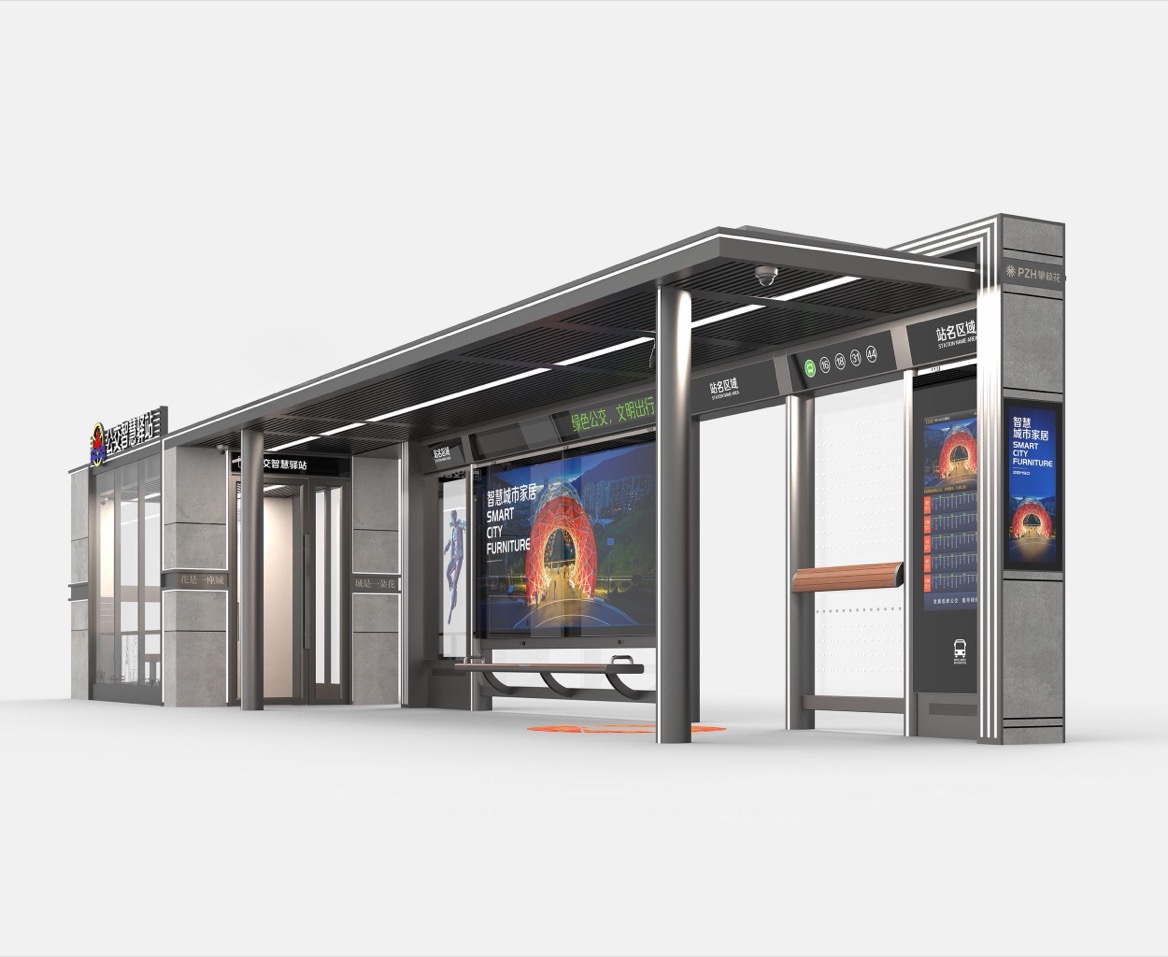
There is no universally best configuration. The following comparison provides a starting point for project discussions, rather than a substitute for engineering calculations.
| Cooling system | Best-fit application | Main advantage | Key limitation |
|---|---|---|---|
| Inverter mini-split | Small, enclosed shelters | Variable output without extensive ductwork | Requires protected outdoor-unit placement |
| Packaged air conditioner | Standardized shelters with a dedicated equipment bay | Integrated equipment arrangement | Requires careful structural, acoustic, and airflow coordination |
| Reversible heat pump | Locations needing cooling and winter heating | One system serves both seasons | Heating performance requires climate-specific verification |
| Direct evaporative cooler | Hot, dry locations | Potentially lower compressor-free cooling energy | Adds moisture and requires water management |
| Fans and passive shading | Open-sided or mild-climate shelters | Simple comfort improvement | Cannot maintain a controlled indoor temperature |
A heat pump is not a completely separate installation category: both split and packaged systems can offer reversible heating.
For an enclosed shelter in a humid climate, refrigerant-based cooling is generally the stronger starting point. For an open-sided shelter, shading and air movement should usually take priority over attempting to refrigerate an uncontrolled space.
A bus shelter experiences changing conditions throughout the day. Passenger numbers rise suddenly, doors open repeatedly, and afternoon sunlight may strike large glass panels.
An inverter-driven compressor can adjust output within its operating range rather than relying entirely on repeated full-capacity starts and stops. This makes variable-capacity equipment worth evaluating for fluctuating loads.
However, minimum cooling capacity matters as much as maximum output. An oversized inverter system can still cycle excessively when demand falls.
Mini-splits avoid extensive distribution ducts, helping preserve headroom and passenger space in compact enclosures.
The indoor unit must still provide even air distribution. Locating it directly above a doorway or blowing cold air continuously onto seated passengers can produce uneven comfort.
The outdoor unit also needs adequate clearance. Concealing it behind decorative panels without sufficient airflow can undermine the installation.
In humid weather, comfort depends on moisture removal as well as temperature reduction. A cooling coil can condense moisture from passing air, but actual performance depends on equipment selection, airflow, runtime, and controls.
Do not assume every inverter unit provides equally effective dehumidification. Request performance information relevant to the project's operating conditions.
A packaged air conditioner can be attractive when a city wants a repeatable equipment arrangement across multiple shelters.
An integrated service compartment may simplify installation coordination and equipment replacement. However, procurement teams should verify:
- Access for routine servicing and complete replacement.
- Separation between supply air, return air, and condenser discharge.
- Noise and vibration near passenger seating.
- Structural support and weather protection.
- Availability of compatible replacement equipment.
The best arrangement is the one local technicians can maintain reliably—not simply the one that looks most concealed.
Direct evaporative cooling lowers air temperature by evaporating water into the supply air. It works best where outdoor humidity is low and requires a suitable path for air to leave the enclosure.
It is less suitable where additional moisture would worsen comfort. Water availability, mineral deposits, cleaning requirements, and drainage also affect feasibility.
Indirect evaporative systems use a different arrangement that can cool supply air without directly adding moisture to it. Their suitability still requires project-specific evaluation.
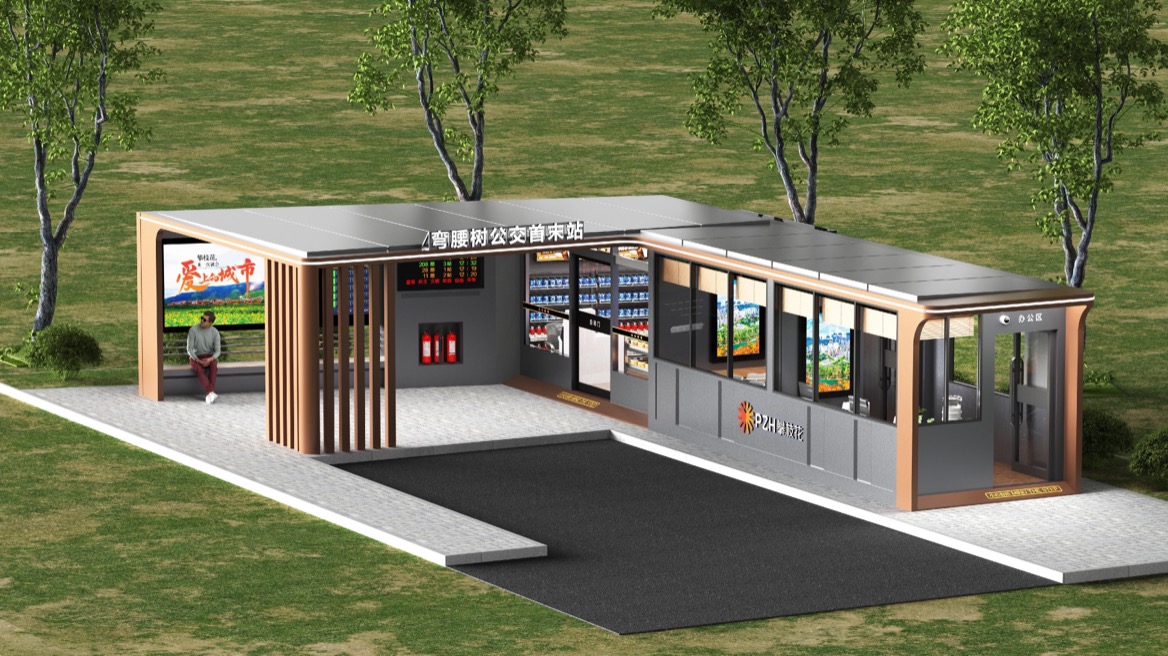
Selecting capacity from floor area alone is a weak approach. A small glass shelter can have substantial solar and infiltration loads.
Ask the project engineer to evaluate these inputs:
1. Local design temperature and humidity.
2. Roof, wall, floor, and glazing construction.
3. Orientation and external shading.
4. Peak occupancy and passenger turnover.
5. Door dimensions, opening frequency, and leakage.
6. Required outdoor-air ventilation.
7. Lighting, displays, and other internal equipment.
The calculation must address sensible load, which raises temperature, and latent load, which involves moisture removal.
Nominal capacity does not establish performance during the hottest operating conditions.
Request manufacturer capacity and power-input data at the project's outdoor design temperature. Also verify the permissible operating range and installation clearances.
For hot-climate projects, this is more useful than choosing equipment solely from a seasonal efficiency label.
Oversizing can increase cycling and weaken humidity control. Instead of adding a large precautionary margin, document assumptions and evaluate credible peak conditions.
Shelters with unusual glazing, entrance patterns, or occupancy should use an appropriate commercial engineering method rather than copying residential sizing shortcuts.
Large transparent panels improve visibility, but they also influence cooling demand.
Consider:
- Solar-control glazing appropriate to the climate.
- Roof overhangs and external shading.
- Insulated roof assemblies.
- Glazing orientation.
- Thermal breaks where practical.
Compare glazing performance alongside visibility, safety, durability, and local requirements. Darker glass is not automatically the best technical choice.
Frequent door openings admit outdoor heat and moisture. Door selection should therefore be part of the cooling strategy.
Self-closing or automatic doors may help where suitable, but accessibility, emergency egress, and safe operation take priority.
Do not treat an air curtain as a guaranteed substitute for a well-designed entrance. Its effectiveness depends on opening geometry, wind, installation, and operation.
Digital advertising screens, lighting, and control equipment consume electricity and generate heat.
Identify which equipment releases heat inside the conditioned enclosure and which rejects it outdoors. Where practical, isolate display ventilation from passenger-space cooling.
This coordination is especially important in shelters combining passenger information, advertising, and connected-city electronics.
A typical ductless mini-split mainly recirculates indoor air. Installing one does not, by itself, establish an adequate outdoor-air ventilation strategy.
An enclosed bus shelter needs ventilation designed for its use and applicable local requirements. Passenger movement through doors should not automatically be treated as a compliant substitute.
In hot, humid weather, outdoor air brings moisture as well as heat. The ventilation load must therefore be included in equipment selection.
Depending on project scale, engineers may consider dedicated ventilation, suitable energy recovery, or additional moisture control. These are design options—not mandatory additions to every shelter.
Outdoor-air intake location also matters. Coordinate it with nearby traffic, exhaust sources, condenser discharge, and local air-quality conditions.
Solar power can contribute to an air-conditioned bus shelter, but roof-mounted panels do not automatically make the installation energy-independent.
The feasibility question is whether available generation and storage can meet the actual electrical load throughout the required operating period.
Evaluate:
- Usable panel area and shading.
- Local solar resource.
- Hourly cooling demand.
- Lighting and display consumption.
- Conversion and storage losses.
- Battery requirements and backup supply.
Distinguish cooling capacity from electrical input. A unit's advertised cooling output is not its electricity consumption.
For many projects, grid-connected solar assistance is a practical option to investigate. Fully off-grid operation requires a more demanding energy assessment, particularly for evening service and cloudy periods.
A low purchase price can conceal expensive maintenance, difficult servicing, or high operating consumption.
Compare complete installed solutions using the same assumptions for weather, occupancy, operating hours, and comfort targets.
Include:
- Equipment, installation, and commissioning.
- Electrical connections and structural provisions.
- Forecast electricity consumption.
- Filter cleaning and replacement.
- Coil cleaning and corrosion protection.
- Condensate drainage maintenance.
- Spare parts and equipment replacement.
- Service access and technician availability.
A concealed installation may look attractive but become costly if technicians must dismantle major shelter components to reach the equipment.
For network procurement, request a documented maintenance procedure before approving the final enclosure design.
A useful improvement over specification-only procurement is to commission one representative shelter before committing to a large batch.
Test the complete installation—not just the air-conditioning unit.
1. Record outdoor temperature, humidity, and solar conditions.
2. Operate displays, lighting, and ventilation normally.
3. Reproduce an agreed passenger and door-opening scenario.
4. Measure temperature and humidity at representative occupied locations.
5. Log electricity use, noise, drainage, and fault signals.
6. Check recovery after repeated entrance activity.
Agree on acceptance criteria before testing. A supply-air temperature reading alone does not establish passenger comfort.
If testing occurs outside peak summer conditions, document that limitation and arrange seasonal verification. Do not present a mild-weather trial as proof of extreme-weather performance.
Ainl's company-provided background describes 16 years of experience developing, manufacturing, and supplying smart-city public facilities and outdoor advertising products.
Its stated manufacturing resources include approximately 150,000 square meters of factory space, provincial-level hardware and software development capabilities, precision sheet-metal processing, large-scale coating facilities, and electrical testing resources.
For an air-conditioned bus shelter project, these capabilities create a basis for coordinating the enclosure with equipment access, screens, lighting, wiring routes, drainage, and branding.
OEM/ODM discussions can cover dimensions, structure, colors, screen configurations, lighting, and solar-power provisions. Final cooling performance, equipment certification, and destination-market compliance should be verified for each project.
Before requesting a quotation, send Ainl the installation location, shelter dimensions, expected occupancy, operating hours, electrical supply, and display requirements. Request an integrated proposal covering the enclosure, cooling arrangement, ventilation, service access, and commissioning plan—not just an air-conditioner model.
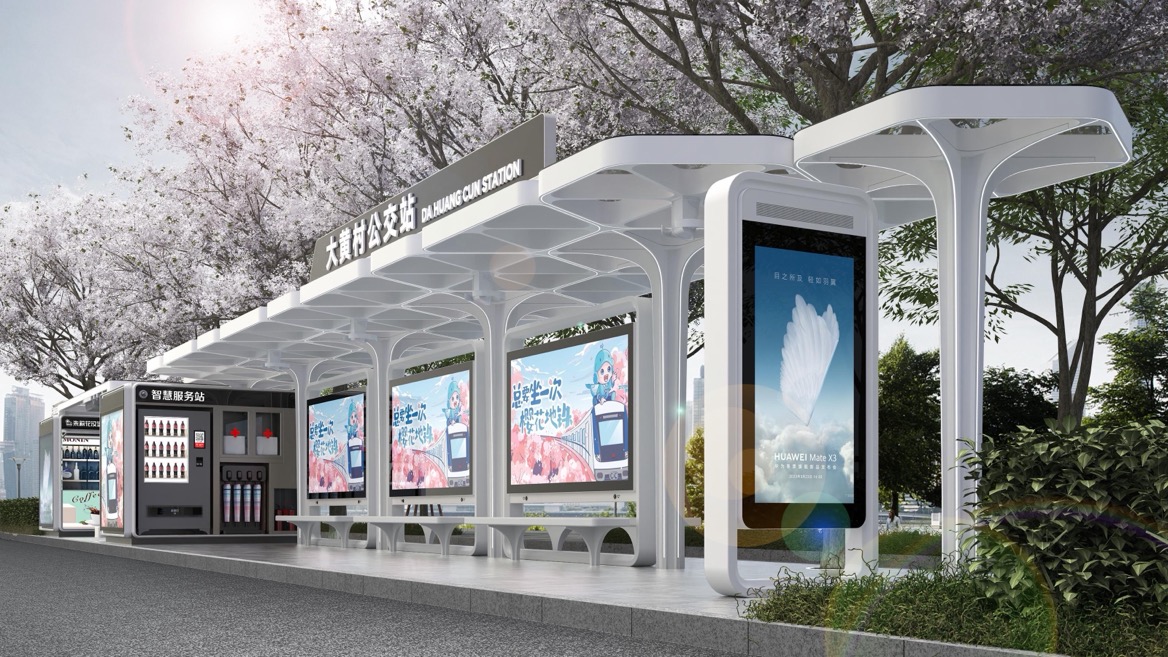
An appropriately sized inverter mini-split is often a strong starting point. Packaged equipment may be preferable where standardized integration and maintenance access favor a self-contained arrangement.
There is no universal capacity per shelter. Climate, glazing, shading, occupancy, door activity, ventilation, and internal equipment must be included in the load calculation.
Yes, where the climate and water infrastructure support it. Direct evaporative cooling is best suited to hot, dry conditions and adds moisture to the air.
Most conventional ductless mini-splits primarily recirculate indoor air. Verify the selected model's capabilities and provide a separate ventilation strategy where required.
Possibly, but only if generation, storage, and backup arrangements match the operating load. Roof area alone is insufficient evidence of continuous off-grid capability.
Follow equipment instructions and adjust the schedule to site conditions. Dust, pollution, coastal exposure, and heavy use may justify more frequent inspections and cleaning.
1. U.S. Department of Energy. [Energy Saver Guide, 2022]. Guidance on cooling-system selection, correct sizing, and evaporative cooling suitability. [energy]
2. U.S. Department of Energy, Building Science Education. [Guide to Sizing & Selecting Air-Source Heat Pumps in Cold Climates]. Supports load assessment, minimum-capacity evaluation, oversizing cautions, and selection using design-condition performance data. [bsesc.energy]
3. U.S. Department of Energy. [Energy Saver 101: Home Cooling]. Explains ductless cooling, moisture removal, and direct evaporative cooling. [energy]
4. U.S. Department of Energy. [Energy-Efficient Management of Mechanical Ventilation and Relative Humidity in Hot-Humid Climates]. Explains outdoor-air moisture loads and interactions between cooling, ventilation, and humidity control. [www1.eere.energy]
5. U.S. Department of Energy. [Home Cooling]. Supports combining mechanical cooling with insulation, shading, and improved enclosure performance. [energy]
6. U.S. Department of Energy. [Chapter 5: Lighting, HVAC, and Plumbing]. Covers solar gains, internal heat gains, control strategies, and direct versus indirect evaporative cooling. [www1.eere.energy]
7. U.S. Department of Energy. [Energy-Saving Hacks to Beat the Summer Heat]. Supports filter, coil, and cooling-equipment maintenance principles. [energy]


