
Email: ainlbusshelter@gmail.com | WhatsApp: +86-18800607527
Views: 220 Author: Ainl Bus Shelter Publish Time: 2026-08-27 Origin: Site


Content Menu
● What Is the Difference Between a Transit Shelter and a Traditional Bus Stop?
● Transit Shelter vs Traditional Bus Stop: Core Comparison
● How Transit Shelters Improve Public Transportation Efficiency
>> Reduced Passenger Uncertainty
>> Improved Comfort Supports Ridership
● Accessibility Is a Design Requirement, Not an Add-On
>> Essential Accessible Shelter Features
● Safety, Visibility, and Passenger Confidence
>> Safety-Oriented Shelter Design
● Smart Bus Shelters Turn Waiting Areas Into Connected City Assets
>> Common Smart Transit Shelter Configurations
● Expert Framework: Where Should Cities Prioritize Shelter Investment?
>> Step 1: Identify Passenger Demand
>> Step 2: Evaluate Environmental Exposure
>> Step 3: Check Site Geometry
>> Step 4: Match Technology to Operations
● Traditional Bus Stops Still Have a Role
● Choosing the Right Transit Shelter Manufacturer
>> Questions to Ask Before Procurement
● Build Better Stops, Build Better Cities
● FAQ
>> 1. What is the main difference between a transit shelter and a bus stop?
>> 2. Do bus shelters improve public transportation efficiency?
>> 3. What features should a smart bus shelter include?
>> 4. How can a bus shelter support accessibility?
>> 5. Can bus shelters be customized for a city brand?
>> 6. Are solar-powered bus shelters practical?
>> 7. What materials are best for outdoor bus shelters?
A transit shelter is far more than a covered waiting area. Compared with a traditional bus stop marked only by a pole, sign, or basic timetable, a well-designed bus shelter can improve passenger comfort, accessibility, safety, information access, and the overall perceived reliability of public transportation.
For city planners, transit operators, advertising operators, and developers, the question is not simply whether to install a shelter. It is how to create a durable, inclusive, digitally connected, and locally recognizable public facility that supports efficient passenger movement while adding long-term value to the streetscape.
At Ainl, we have spent 16 years designing and manufacturing bus stop shelters, smart city public facilities, outdoor advertising products, and customized urban infrastructure solutions. From structural engineering and precision sheet-metal processing to coating, lighting, digital display integration, and solar-powered configurations, we see every project as both a transportation asset and a public-facing city landmark.
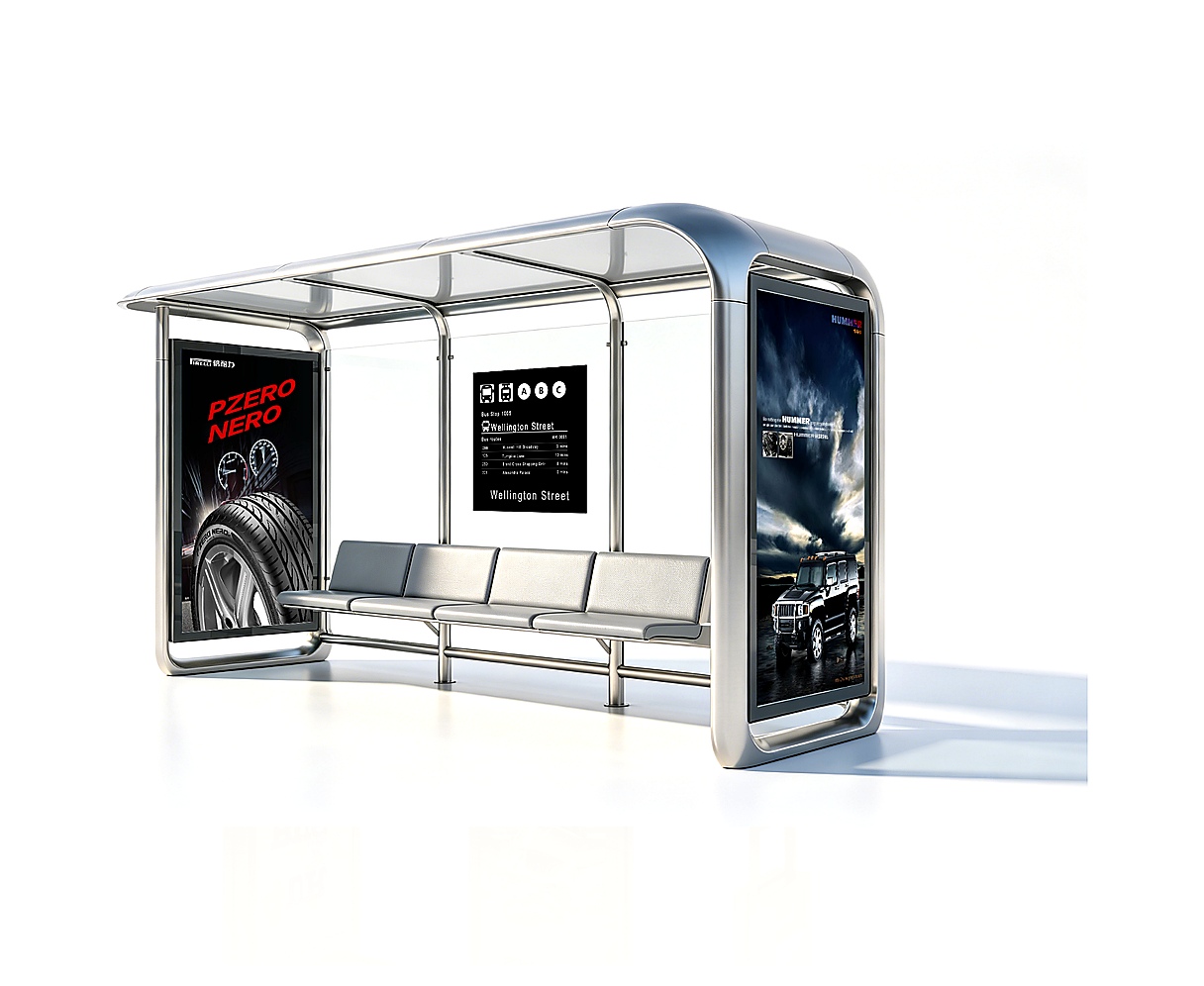
A traditional bus stop generally provides the minimum identification needed for passengers to board a bus. It may include a route sign, a timetable panel, and sometimes a small bench. Its core purpose is operational: marking where a vehicle stops.
A transit shelter, by contrast, is a more complete passenger facility. It combines physical protection, clear information, accessible space, lighting, seating, and—where needed—smart technology such as real-time arrival displays, digital advertising screens, CCTV, public Wi-Fi, USB charging, and solar power systems.
The distinction matters because waiting is part of the transit journey. If the waiting environment feels unsafe, confusing, uncomfortable, or inaccessible, passengers may view the entire service as lower quality—even if buses themselves operate on schedule.
Research from Transport Focus found that bus stops and the boarding experience are among the biggest influences on passenger satisfaction. Its survey of more than 3,000 bus passengers also found strong demand for better weather protection, accessible design, accurate service information, seating, lighting, and safety features.
| Feature | Traditional Bus Stop | Modern Transit Shelter | Operational Impact |
|---|---|---|---|
| Weather protection | Usually none | Roof, side panels, wind protection, optional drainage | Makes waiting more tolerable in rain, heat, wind, and cold |
| Passenger information | Static route sign or printed timetable | Maps, digital arrival displays, service alerts, interactive screens | Reduces uncertainty and improves trip planning |
| Seating | Often unavailable | Bench, perch seating, accessible seating options | Supports elderly passengers, families, and people with mobility limitations |
| Lighting | Dependent on nearby streetlights | Integrated LED or solar-powered lighting | Improves visibility and perceived security |
| Accessibility | May have uneven pavement or blocked paths | Accessible route, boarding area, clear interior maneuvering space | Supports more inclusive public transportation |
| Safety | Minimal physical support | Lighting, transparent panels, CCTV-ready design, help-point integration | Helps create a more secure waiting environment |
| Branding | Limited to a standard transit sign | Custom colors, city identity, route branding, advertising panels | Creates a recognizable urban identity |
| Energy system | Not applicable | Grid-connected, solar-powered, or hybrid options | Supports off-grid deployment and smart-device operation |
| Commercial value | Low | Digital or static out-of-home advertising capability | Can support revenue-generation models |
| Maintenance | Simple but often visually neglected | Engineered materials, modular components, managed maintenance access | Improves lifecycle control and asset durability |
A traditional bus stop can meet a basic operational need. A modern bus shelter helps cities improve the entire passenger experience around that stop.
Public transportation efficiency is often measured through vehicle speed, frequency, on-time performance, and capacity. Those indicators matter, but they do not tell the complete story.
A transit system also becomes more efficient when passengers can find stops easily, understand service information quickly, wait in comfort, board safely, and feel confident using the network again.
One of the most valuable smart bus shelter features is real-time passenger information.
At a conventional stop, a passenger may see a printed timetable but still have no way to know whether the bus is delayed, diverted, cancelled, or arriving shortly. This uncertainty increases perceived waiting time and can lead people to choose private cars, taxis, or ride-hailing services instead.
A digital passenger information display can communicate:
- Expected bus arrival times
- Route changes and service disruptions
- Stop-specific route maps
- Transfer guidance
- Local weather information
- Emergency announcements
- Public-service messages
The bus may not physically arrive faster, but the journey feels more predictable. That predictability is a major factor in passenger trust.
A well-planned transit shelter does not only protect people while they wait. It can also help organize the waiting area.
For example, a shelter can be positioned so passengers have a protected space without blocking the accessible boarding zone or the pedestrian path. Clear route signage and appropriately placed seating can reduce crowding around the curb. This is particularly important at high-volume urban stops, BRT corridors, shopping districts, schools, hospitals, transport interchanges, and industrial parks.
The Federal Transit Administration notes that bus shelters can help differentiate transit services, provide passenger information, and should be spatially connected to bus ramps or lifts for people using mobility aids.
Comfort is not a luxury in public transportation. It influences whether people consider transit a practical daily option.
A shelter reduces exposure to rain, direct sunlight, wind, and cold. In hot climates, shade and ventilation become especially important. In rainy regions, roof coverage, drainage design, and durable corrosion-resistant materials have a direct impact on daily usability.
A study on bus stops, temperature, and ridership found that shelters and tree cover are important considerations for protecting passengers from weather exposure, particularly as cities prepare for more frequent extreme-weather conditions.
For a transit authority, the lesson is clear: prioritize shelter investment where passenger waiting times are long, weather conditions are severe, or ridership demand is high.
A high-quality bus stop shelter should work for as many people as possible, including wheelchair users, older adults, pregnant passengers, people with strollers, passengers carrying luggage, and people with visual or mobility impairments.
A shelter that looks attractive but blocks the sidewalk, leaves no wheelchair maneuvering space, or interferes with vehicle ramp deployment is not a successful transit facility.
A practical accessible transit shelter design should consider:
- Clear boarding and alighting space near the curb
- A stable, slip-resistant surface
- An unobstructed pedestrian route around or through the shelter
- Adequate internal clear floor space for mobility devices
- Seating that does not prevent wheelchair access
- Clear, high-contrast route and wayfinding information
- Appropriate lighting for signs, paths, and waiting areas
- Avoidance of poles, advertising panels, bins, or screens that obstruct movement
The U.S. Access Board states that where a bus shelter is provided, it must include a minimum clear floor or ground space and connect via an accessible route to the boarding and alighting area.
This principle applies beyond any one market. Local regulations differ, but the practical goal remains the same: passengers should be able to approach, wait, obtain information, and board without unnecessary barriers.
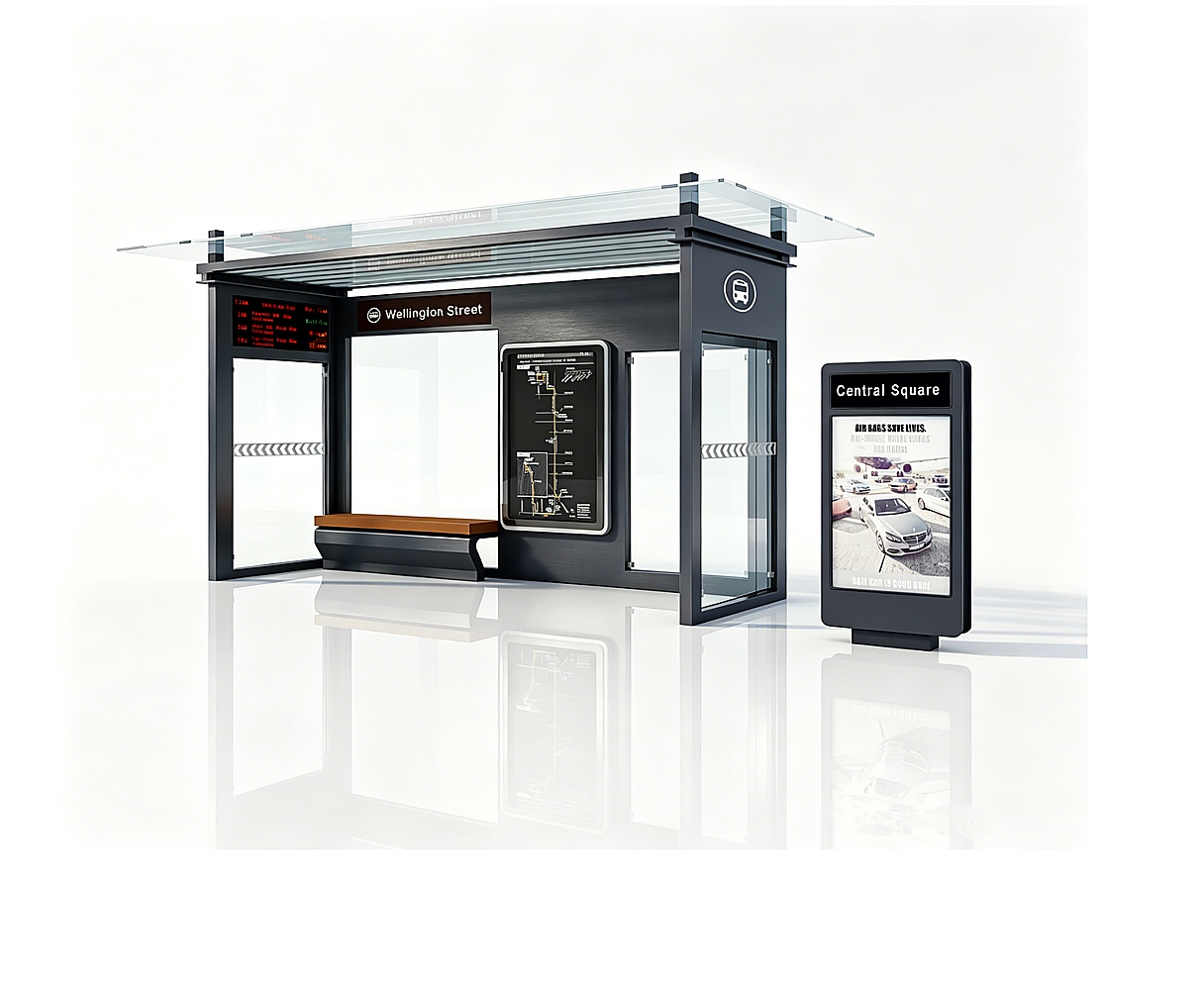
Passengers judge safety before they step onto the bus. A dark, isolated, or poorly maintained traditional bus stop can discourage use, especially at night.
A modern transit shelter can improve passenger confidence through a combination of physical design and integrated technology.
Effective safety features may include:
- Integrated LED lighting for the shelter interior and surrounding pavement
- Transparent or semi-transparent side panels to preserve visibility
- CCTV-ready mounting positions
- Emergency intercom or help-point compatibility
- Anti-graffiti and impact-resistant materials
- Clearly visible route identification
- Open sightlines to approaching buses and surrounding streets
- Durable, tamper-resistant electrical enclosures
Passenger research has identified lighting as a major concern. Transport Focus reported that nearly half of surveyed passengers said dim or broken lighting seriously affected their feeling of security, with particular concern at night.
From an engineering perspective, safety is not achieved through one device alone. It comes from combining lighting, visibility, maintenance, accessible circulation, durable construction, and clear information.
The most advanced transit shelters function as small smart-city nodes. They create a point of connection between passengers, transit operations, municipal communication, commercial advertising, and urban data systems.
A city can choose technology based on project priorities, local climate, power availability, budget, and maintenance capacity.
| Configuration | Typical Features | Suitable Applications |
|---|---|---|
| Basic transit shelter | Roof, seating, route map, lighting | Residential streets, smaller towns, low-to-medium traffic stops |
| Premium bus shelter | Advertising panel, LED lighting, enhanced seating, weather-resistant enclosure | Commercial areas, tourism districts, high-visibility routes |
| Smart bus shelter | Real-time display, digital signage, CCTV-ready system, charging, Wi-Fi capability | City centers, major transfer points, smart-city projects |
| Solar bus shelter | Solar panels, batteries, LED lighting, low-power display options | Off-grid locations, parks, suburban corridors, sustainability-focused projects |
| BRT station shelter | Larger platform coverage, gates, route information, crowd-control features | Bus rapid transit and high-capacity corridors |
Ainl supports OEM and ODM customization across shelter size, structural design, finish, color, lighting, screens, solar solutions, advertising components, and local city-branding elements. This flexibility is important because a coastal city, a desert corridor, a snowy region, and a dense central business district require very different shelter solutions.
Not every bus stop needs the same level of infrastructure. A city can use a structured prioritization process rather than selecting sites only by visibility or advertising value.
Start with stops that have:
- High daily boardings and alightings
- Long passenger dwell or transfer times
- Frequent service
- Peak-hour crowding
- Nearby schools, hospitals, markets, employment centers, or transit hubs
National transit design guidance recommends shelters at stops with high boarding volumes and stresses the importance of safe sidewalk access, appropriate crossings, lighting, maps, and schedules.
Prioritize stops exposed to:
- Heavy rainfall
- Intense sun and high temperatures
- Strong wind
- Snow and freezing conditions
- Poor nighttime visibility
- Long headways between buses
A shelter delivers greater passenger value when the waiting environment is difficult.
Before selecting a standard shelter model, evaluate:
1. Sidewalk width and clear pedestrian path
2. Curb position and bus stopping zone
3. Vehicle ramp or lift deployment area
4. Underground utilities and drainage
5. Sign visibility for approaching vehicles and passengers
6. Nearby trees, street furniture, storefronts, and parking
7. Power access, network coverage, and solar exposure
A shelter should fit the street rather than force pedestrians into an unsafe or narrow route.
Do not install complex hardware without a maintenance plan. A real-time display requires reliable data integration. Solar power requires a site-specific energy assessment. Digital advertising needs content control, display protection, remote monitoring, and local regulatory review.
The best smart bus shelter is not the one with the longest feature list. It is the one that matches actual passenger needs and the operator's ability to maintain it.
A transit shelter is not automatically the right solution for every location.
A traditional bus stop may be appropriate where passenger demand is low, sidewalks are extremely narrow, the stop is temporary, local regulations limit street furniture, or a shelter would obstruct sightlines and pedestrian flow.
However, a basic stop should still provide clear identification, legible route information, safe access, and adequate lighting. In many cities, a phased approach works well: upgrade the highest-priority stops first, then expand the network as budgets and operational capacity grow.
Transit Center recommends using stop-level ridership data to prioritize improvements and treating better stops as an important contributor to transit quality and passenger satisfaction.
A bus shelter is a long-term infrastructure asset. Buyers should evaluate more than the initial unit price.
- Can the structure meet local wind, snow, seismic, and corrosion requirements?
- What materials are used for the frame, roof, panels, fasteners, and coatings?
- Can dimensions be customized for different sidewalk conditions?
- Is the shelter compatible with accessible boarding requirements?
- Can it integrate LED lighting, digital signage, CCTV, solar panels, or advertising systems?
- Are electrical systems tested and protected for outdoor use?
- Is the design modular for shipping, installation, maintenance, and replacement?
- Can the manufacturer support custom branding and OEM/ODM requirements?
- What production controls, quality systems, and project experience support delivery?
Ainl combines large-scale production capacity with integrated research, sheet-metal precision processing, coating operations, electrical testing, structural fabrication, and municipal construction qualifications. This allows project teams to coordinate structural, visual, electrical, and smart-system requirements through one experienced solution provider.
The comparison between a transit shelter and a traditional bus stop is ultimately a comparison between minimum functionality and a complete public transportation experience.
A traditional stop tells passengers where to wait. A modern transit shelter helps them wait safely, comfortably, accessibly, and with confidence.
For municipalities, transit agencies, contractors, advertisers, and urban developers, the right shelter program can strengthen public transportation efficiency, improve city appearance, support digital communication, create advertising value, and make daily travel more inclusive.
Contact Ainl to discuss a customized bus stop shelter, smart bus shelter, outdoor advertising shelter, or solar-powered transit infrastructure solution for your next urban mobility project.
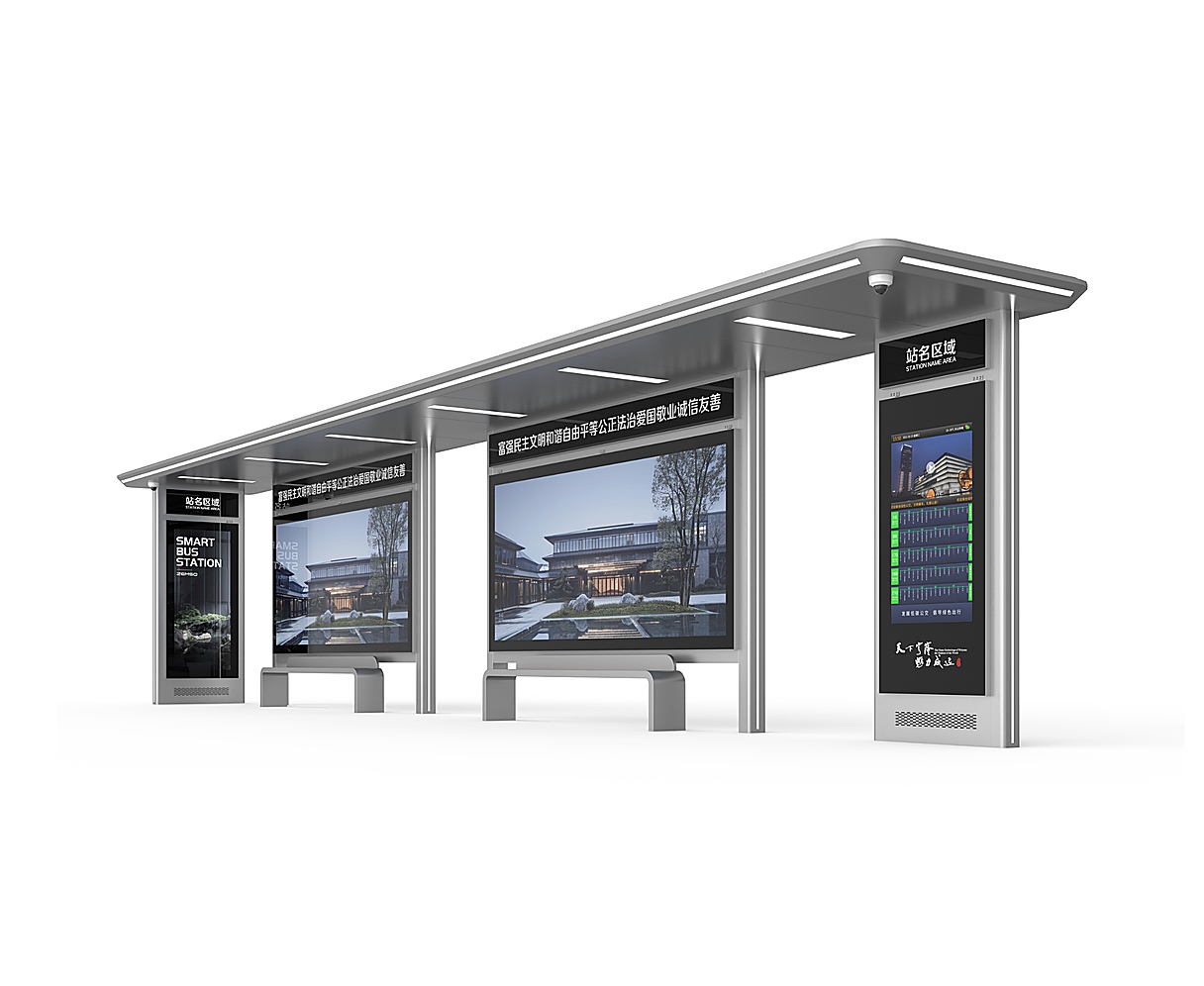
A traditional bus stop primarily identifies where passengers board. A transit shelter adds weather protection, seating, lighting, route information, accessible space, and optional smart features such as real-time arrival displays and digital advertising.
Yes. Shelters improve waiting conditions, reduce passenger uncertainty, support accessible boarding, and make transit feel more reliable and comfortable. These factors can improve passenger satisfaction and encourage repeated use.
Common features include real-time bus arrival information, LED lighting, digital signage, CCTV-ready mounting points, USB charging, Wi-Fi capability, solar power, route maps, public announcements, and remote equipment monitoring.
An accessible shelter should maintain a clear route to the boarding area, provide adequate maneuvering space for mobility devices, use stable slip-resistant surfaces, avoid obstructing sidewalks, and offer readable signs and lighting.
Yes. Custom bus shelters can incorporate city colors, logos, architectural styles, advertising panels, route identity systems, local-language information, custom dimensions, lighting, and screen configurations.
Solar-powered bus shelters can be practical where grid power is difficult or expensive to install. They are often used for LED lighting, low-power displays, security devices, and charging functions, subject to local sunlight conditions and energy-demand calculations.
Material selection depends on climate and project requirements. Common options include galvanized steel, aluminum, stainless steel components, tempered or laminated glass, polycarbonate panels, powder coating, and weather-resistant electrical enclosures.
1. [Transport Focus — Passengers Help Design the Bus Shelters of Tomorrow]
2. [National Library of Medicine — Heat-Moderating Effects of Bus Stop Shelters and Tree Shade]
3. [Federal Transit Administration — Stops, Spacing, Location and Design]
4. [U.S. Access Board — ADA Accessibility Standards]
5. [NACTO — Bus Stops]
6. [Transit Center — From Sorry to Superb: Better Bus Stops]


