
Email: ainlbusshelter@gmail.com | WhatsApp: +86-18800607527
Views: 255 Author: Ainl Bus Shelter Publish Time: 2026-10-13 Origin: Site


Content Menu
● Windproof Bus Shelter vs Conventional Shelter: Key Differences
● Why Typhoon-Prone Areas Require Different Structural Thinking
>> Roof Uplift and Lateral Loads Need Separate Checks
>> Coastal Exposure Adds More Than Wind
● Structural Solutions That Make a Wind-Resistant Shelter Different
>> 1. Establish a Continuous Load Path
>> 2. Design the Canopy as a System
>> 3. Engineer Anchors and Foundations Together
● Side Panels, Advertising Displays, and Solar Equipment
>> More Enclosure Is Not Automatically Better
>> Smart Equipment Must Be Included in the Design
● Coastal Corrosion: Protecting Strength Over Time
● Expert Insight: Compare Wind Ratings Before Comparing Prices
● Practical Scenario: A Waterfront Stop with Digital Advertising
● How to Specify a Typhoon-Resistant Bus Shelter
>> Step 1: Prepare a Site Brief
>> Step 2: Define Performance Requirements
>> Step 3: Freeze the Complete Configuration
>> Step 4: Review the Evidence
>> Step 5: Control Installation and Handover
● Conventional Shelter or Wind-Resistant Shelter: Which Offers Better Value?
● How Ainl Can Support Customized Shelter Projects
● Plan Your Shelter Around the Site—not a Generic Rating
>> Is a Windproof Bus Shelter Completely Typhoon-Proof?
>> Can a Conventional Shelter Be Upgraded?
>> Is a Heavier Shelter Always More Wind-Resistant?
>> Should a Coastal Bus Shelter Use Glass or Polycarbonate?
>> Can Solar Panels Be Added After Installation?
>> Is a Wind-Resistant Bus Shelter an Emergency Storm Shelter?
A windproof bus shelter differs from a conventional shelter through verified structural performance—not simply thicker columns or a heavier roof. For typhoon-prone areas, the essential question is whether the complete assembly can transfer wind forces safely through its roof, panels, connections, anchors, and foundations.
When comparing a windproof bus shelter vs conventional shelter, buyers should therefore focus on the engineering basis, installation requirements, and long-term maintenance plan. "Windproof" is a product description, not a guarantee of unlimited resistance.
From a procurement perspective, the most useful principle is verification: every performance claim should connect to calculations, specifications, testing where appropriate, and the actual installation conditions.
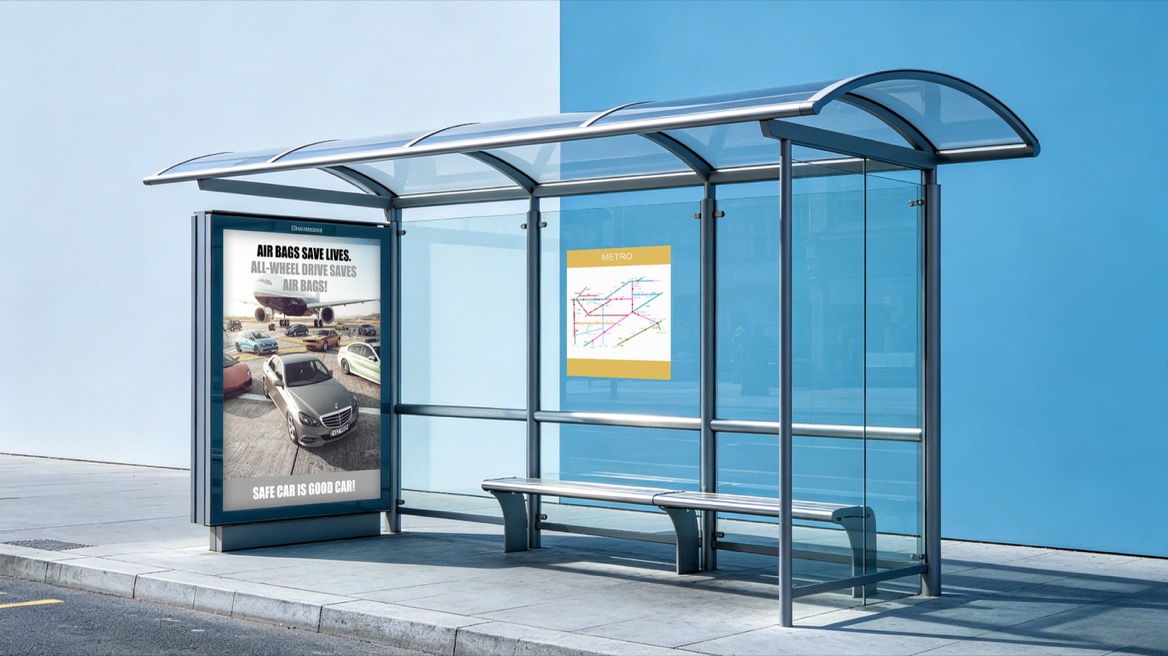
A conventional shelter typically prioritizes everyday weather protection, passenger comfort, appearance, and budget. A wind-resistant bus shelter adds a project-specific engineering approach for demanding wind exposure.
These categories are not absolute. A conventional-looking shelter can perform well when properly engineered, while an aggressively styled "typhoon-resistant" product may lack supporting evidence.
| Comparison point | Conventional shelter | Engineered wind-resistant shelter |
|---|---|---|
| Design basis | May use a standard configuration | Documents site-specific wind requirements |
| Structural frame | Selected for intended routine conditions | Verified for governing loads and combinations |
| Roof connections | Standard attachment arrangement | Checked for uplift and local connection forces |
| Side panels | Primarily address rain and comfort | Evaluated for wind pressure and retention |
| Foundations | May follow a standard detail | Matched to reactions, ground conditions, and anchors |
| Advertising equipment | Often treated as an accessory | Included in structural load assessment |
| Coastal durability | General exterior protection | Exposure-specific corrosion strategy |
| Handover package | Product drawings and instructions | Calculations, installation criteria, and inspection requirements |
These distinctions describe procurement expectations rather than universal product classifications. The submitted engineering documents determine whether either option suits the site.
Wind does more than push a shelter sideways. It can also create upward forces on the canopy. Roof panels, brackets, and connections must resist their relevant loads, even when the main frame remains stable.
A freestanding bus stop canopy also behaves differently from a canopy attached to a building. Hong Kong's official wind-code explanatory notes distinguish these configurations and identify separate guidance for freestanding canopies. A design method should therefore match the actual shelter geometry.
A coastal site may combine strong winds with salt exposure, wind-driven rain, flooding, erosion, or scour. Strengthening the frame alone does not address every hazard.
FEMA's coastal construction guidance explains that proximity to water can increase exposure to corrosion, debris, flooding, and foundation-related hazards. These principles inform coastal shelter planning, although the manual is not a bus-shelter certification standard.
The central engineering concept is a continuous load path: forces must travel from the loaded surface through connected structural elements to the foundation and supporting ground.
For a bus shelter, a simplified path is:
1. Roof sheets or canopy panels receive wind loads.
2. Fasteners transfer loads into roof framing.
3. Beams and connections transfer forces into columns.
4. Base plates and anchors transfer reactions into foundations.
5. Foundations transfer those forces into the ground.
A weak connection can interrupt this chain even when adjacent members are strong. Coastal construction guidance emphasizes that every link must transfer its assigned forces without breaking.
Buyers should request evidence for connections, not just steel-section dimensions.
A curved or sloped roof may suit a project, but appearance does not prove lower wind loads. The engineer must assess roof geometry, overhangs, support arrangement, and the applicable pressure coefficients.
Practical design options include:
- Reducing unnecessarily large unsupported overhangs.
- Providing direct, inspectable roof-to-frame connections.
- Checking edge details and local panel attachments.
- Maintaining positive drainage.
- Evaluating decorative trims alongside the primary canopy.
The appropriate solution depends on the selected design method and geometry. Unusual forms should receive additional engineering review rather than assumed aerodynamic benefits. Hong Kong's wind code identifies unusual shapes and complicated surroundings as conditions that can require wind-tunnel assessment within its scope.
A strong superstructure cannot compensate for inadequate anchorage.
The project engineer should check anchor forces, base plates, concrete capacity, foundation stability, and ground conditions. Existing pavement should not automatically be treated as a structural foundation.
Before approving installation, establish:
- Whether the foundation is new or existing.
- Available concrete dimensions and reinforcement information.
- Anchor type, spacing, and installation requirements.
- Underground utility constraints.
- Applicable flood, erosion, or scour exposure.
The objective is a complete load path into suitable ground—not merely a shelter that appears firmly bolted down.
Side panels improve rain protection and comfort, but they also change the surfaces exposed to wind. Their layout must be included in the structural assessment.
Compare open, partially enclosed, and more enclosed configurations using the selected code—not assumptions that ventilation always reduces loading or that solid walls always improve resistance.
Panel retention matters as much as panel material. Ask how glazing, metal panels, advertising doors, and removable covers remain secured under the specified conditions.
Digital displays, lightboxes, solar modules, and battery enclosures should form part of the approved configuration.
Request checks covering:
- Equipment dimensions, mass, and position.
- Wind-exposed surface area.
- Brackets and attachment points.
- Access-door locking arrangements.
- Cable routing and water-management details.
- Maintenance access without damaging structural protection.
ASCE-related technical guidance notes that rooftop solar provisions for enclosed buildings do not automatically apply to open structures because airflow differs. A bus shelter's solar installation therefore needs an applicable assessment rather than a copied building-roof detail.
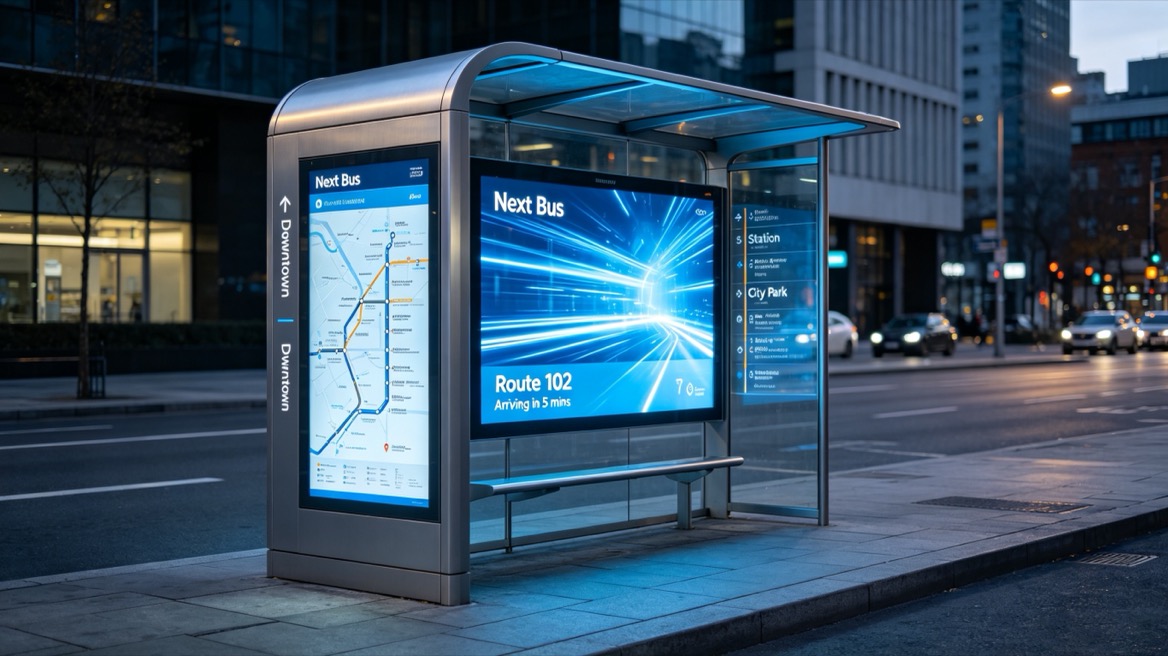
Corrosion protection is a structural durability issue, not just a finishing choice. A connection that loses section over time may no longer provide its intended resistance.
FEMA guidance identifies accelerated corrosion near saltwater and recommends matching materials and protection to exposure. It also discusses stainless-steel connectors where rapid corrosion is expected.
For a coastal bus shelter, specify the complete protection system:
- Substrate preparation.
- Metallic protection, where selected.
- Compatible coating layers.
- Weld and cut-edge treatment.
- Fastener materials.
- Measures against incompatible-metal contact.
- Inspection and repair procedures.
Do not assume powder coating alone demonstrates coastal suitability. Likewise, a coating test result should not be converted directly into a guaranteed outdoor service life.
The procurement question is practical: what system is proposed, what exposure does it address, and how will damage be maintained?
A supplier's statement that a shelter withstands a particular wind speed is incomplete without its engineering basis.
ASCE defines basic wind speed using a three-second gust at a specified height and exposure. Ratings using different averaging periods or reference conditions are not directly interchangeable.
Ask each supplier to identify:
| Required information | Why it matters |
|---|---|
| Applicable code and edition | Establishes the calculation framework |
| Wind-speed definition | Makes ratings interpretable |
| Terrain and exposure assumptions | Connects the rating to site conditions |
| Topographic considerations | Addresses local wind amplification |
| Shelter dimensions and panel layout | Defines the configuration assessed |
| Equipment included | Prevents unassessed accessory additions |
| Foundation requirements | Connects product performance to installation |
| Calculation or testing scope | Shows what the evidence actually covers |
A useful tender rule is to reject unsupported headline ratings as comparison evidence. Compare documented configurations instead.
Consider a hypothetical waterfront project requiring a roof, seating, side glazing, a digital advertising display, and solar lighting.
This is an illustrative planning scenario—not an Ainl project claim.
A conventional quotation might list dimensions, materials, finishes, and equipment. A wind-resistant proposal should additionally explain how the complete configuration will be evaluated.
Three questions are especially valuable:
1. Does the advertising display change the forces transferred into the frame?
2. Are the solar mounting details appropriate for an open shelter?
3. Do the proposed foundations suit the ground and coastal hazards?
The buyer should also ask what happens when the configuration changes. Adding a second display or extending the canopy may require renewed assessment.
This scenario shows why comparing roof thickness alone misses important structural relationships.
Provide the location, layout, photographs, available survey information, nearby buildings, coastline exposure, and known ground conditions.
Include passenger capacity, accessibility needs, and maintenance access.
Have a qualified local engineer establish the applicable design basis, loads, combinations, and required documentation.
Avoid prescribing a universal wind speed without confirming its meaning and local applicability.
Confirm canopy dimensions, panel layout, advertising equipment, lighting, solar components, and branding features before final calculations.
Request coordinated drawings, structural calculations, material specifications, connection details, and relevant test reports.
A test on one component does not establish performance of the entire shelter.
Require foundation records, anchor installation checks, assembly inspections, coating repairs, and a maintenance manual.
Photographic records can help document concealed details before they become inaccessible.
A conventional shelter can be appropriate when its documented performance meets the project's exposure and requirements. It should not be rejected merely because it uses a simpler configuration.
For demanding coastal sites, additional engineering and durability measures may justify higher initial expenditure. However, no universal cost premium or maintenance saving can be stated without comparable project data.
Evaluate lifecycle cost through:
- Initial engineering and manufacturing.
- Foundations and installation.
- Routine inspection and corrosion repairs.
- Replacement panels and equipment.
- Post-storm assessment.
- Service disruption and reinstatement.
The strongest comparison uses the same site, configuration, performance requirements, and evaluation period.
According to the company information supplied for this article, Ainl has 16 years of experience developing, manufacturing, and selling smart-city public facilities and outdoor advertising products.
Its stated capabilities include approximately 150,000 square meters of factory space, provincial-level hardware and software research facilities, CNC sheet-metal processing, a large coating center, and an electrical testing laboratory.
Ainl also reports national high-tech enterprise status, relevant construction qualifications, management-system certifications, and safety-standardization certification.
These capabilities support manufacturing and project coordination. They do not independently prove the wind resistance of a particular shelter.
Ainl's OEM/ODM service can address dimensions, structure, color, screens, lighting, solar power, and city-branding elements. For typhoon-prone projects, those options should be coordinated with project-specific engineering and local approval requirements.
Send Ainl your project location, shelter dimensions, exposure conditions, advertising requirements, and preferred lighting or solar configuration.
Request a customized proposal identifying the structural design basis, foundation responsibilities, corrosion-protection approach, and documentation available for review. This creates a clearer route from product selection to a maintainable, site-appropriate installation.
No. Performance is limited by the documented design conditions, configuration, installation, and condition over time. Request a defined engineering basis rather than an unlimited "typhoon-proof" promise.
Potentially. An engineer must assess the existing frame, connections, anchors, foundations, and corrosion condition. Reinforcing visible columns alone may leave other weaknesses unresolved.
No. Weight is only one factor. Connections, geometry, foundation resistance, and the complete load path also determine performance.
Neither material is automatically superior for every project. Compare required strength, retention details, impact requirements, durability, visibility, and replacement practicality for the selected configuration.
Only after reviewing their effects on the existing design. Their mounting, wind exposure, and added loads require assessment appropriate to the shelter.
No—not unless it separately meets the applicable storm-shelter requirements. FEMA distinguishes engineered safe rooms and storm shelters as structures specifically intended for extreme-wind life-safety protection.
1. [FEMA — Coastal Construction Manual, Fourth Edition, Volume II]. Guidance on coastal hazards, structural durability, corrosion, and construction considerations.
2. [Hong Kong Buildings Department — Code of Practice on Wind Effects in Hong Kong 2019]. Official wind-design framework and conditions requiring specialist assessment.
3. [Hong Kong Buildings Department — Explanatory Notes to the Code of Practice on Wind Effects in Hong Kong 2019]. Discussion of attached and freestanding canopy treatment.
4. [ASCE AMPLIFY — Basic Wind Speed Definition]. Reference conditions used to define basic wind speed.
5. [STRUCTURE Magazine — ASCE 7-16 Wind Load Provisions]. Technical discussion of solar-panel wind provisions and limitations for open structures.
6. [FEMA — Safe Rooms for Tornadoes and Hurricanes, FEMA P-361]. Distinction between ordinary structures, storm shelters, and safe rooms.
7. [CED Engineering — Coastal Construction: Designing the Building]. Explanation of continuous load paths and coastal material protection.


