
Email: ainlbusshelter@gmail.com | WhatsApp: +86-18800607527
Views: 219 Author: Ainl Bus Shelter Publish Time: 2026-10-23 Origin: Site


Content Menu
● How We Selected These Bus Shelter Suppliers
● Why Source Bus Shelters From Japan?
>> A Strong Aluminum and Metalworking Supply Base
>> An Established Market for Advertising-Funded Shelters
>> Current Infrastructure Data: What It Does—and Does Not—Show
● Bus Shelter Supplier Comparison: Capacity, MOQ, and Certification
● 1. Ainl: A Custom Manufacturing Alternative for Japan-Focused Projects
>> Core Strengths and Manufacturing Resources
>> Main Markets and Procurement Fit
● 2. Sankyo Alumi / Sankyo Tateyama: Aluminum Shelter Systems and Exterior Engineering
>> Main Markets and Customization Scope
● 3. Shikoku Kasei Kenzai: A Dedicated Bus Stop Shelter Product Option
>> Main Markets and Customization Scope
● 4. DAIKEN Co., Ltd.: Walkway Shelter Systems for Project-Specific Evaluation
>> Main Markets and Customization Scope
● 5. MCDecaux: Advertising-Funded Bus Shelter Infrastructure
>> Main Markets and Customization Scope
● Technical Buyer's Guide: How to Specify a Bus Shelter Properly
>> 1. Define Materials Beyond "Steel" or "Aluminum"
>> 2. Specify the Entire Corrosion-Control System
>> 3. Make Structural Assumptions Site-Specific
>> 4. Separate Japanese Compliance From Export Labels
>> 5. Design Accessibility Into the Layout
● An Often-Overlooked Procurement Trap: The Foundation Interface
● Factory Verification, Sampling, and Logistics
>> Verify the Actual Production Arrangement
>> Approve a First Article Before a Large Rollout
>> Compare Landed and Installed Costs
● Conclusion: Select the Supplier Model Before Comparing Prices
>> 1. How Can We Verify Whether a Supplier's ISO Certificate Has Expired?
>> 2. Does a CE-Marked Smart Bus Shelter Automatically Comply With Japanese Requirements?
>> 3. Can We Start With One Prototype Without Committing to a Large MOQ?
>> 4. How Can We Prevent Material Substitution After Sample Approval?
>> 5. How Should We Assess a Solar Bus Shelter for Reliable Year-Round Operation?
Choosing a bus shelter supplier for Japan involves more than comparing roof designs and unit prices. Procurement managers must assess structural suitability, corrosion resistance, pedestrian accessibility, electrical compliance, installation responsibilities, and long-term spare-parts support.
Japan offers an established supply base for aluminum exterior products, public-space infrastructure, and advertising-funded street furniture. However, the market includes several different business models: manufacturers selling physical structures, suppliers adapting modular shelter systems, and operators delivering shelters through advertising concessions.
This guide compares five relevant sourcing options. Ainl appears first as a China-based custom manufacturing alternative for projects serving Japan; it is not presented as a Japanese manufacturer. The other companies are Japan-based manufacturers or infrastructure service providers.
The central purchasing principle is verifiability: a supplier should substantiate its materials, engineering assumptions, production arrangements, and after-sales commitments before receiving a production order.
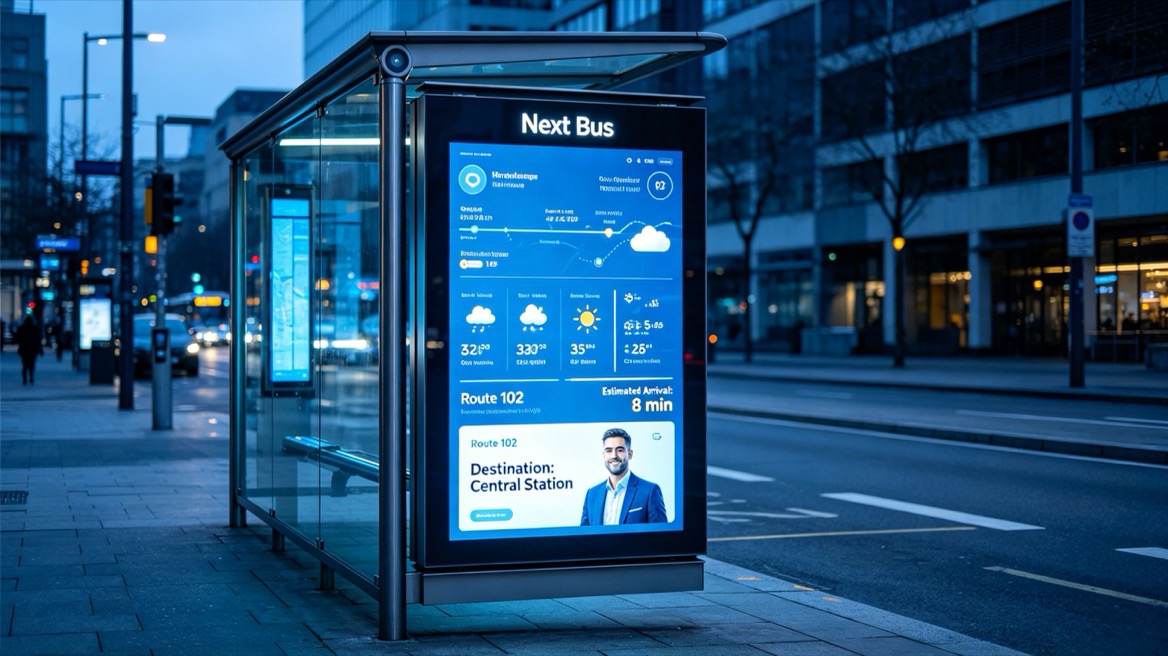
This is an editorial procurement shortlist, not an official ranking by market share, production volume, or independently audited customer satisfaction.
The selection considers publicly available company information, identifiable shelter or related public-exterior capabilities, and the practical relevance of each supplier's business model. No factory visits, customer interviews, or physical product tests were conducted for this article.
| Evaluation area | What procurement managers should verify |
|---|---|
| Manufacturing identity | Legal entity, factory address, in-house processes, and subcontracted operations |
| Engineering capability | Site-specific structural calculations, foundation interfaces, drainage, and maintenance access |
| Materials and finishing | Material certificates, section thickness, coating specifications, and corrosion-control details |
| Quality control | Incoming inspection, welding inspection, dimensional checks, coating records, and electrical testing |
| Delivery reliability | Production schedule, approval milestones, capacity allocation, and packaging plans |
| Customization | Documented limits for dimensions, finishes, branding, lighting, displays, and solar systems |
| Compliance | Applicable Japanese requirements and current certificates with relevant scopes |
| Lifecycle support | Replacement glazing, roof panels, locks, lighting drivers, screens, and installation documentation |
Supplier claims and independently verified information should remain separate. Where annual shelter capacity, minimum order quantity, or certificate details are unavailable, this guide identifies the gap rather than supplying an estimate.
Japan's industrial strengths are relevant to bus shelter frames, roof systems, exterior finishes, and precision assembly.
Toyama is particularly important. The Japan External Trade Organization identifies the prefecture as a leading aluminum production center with an established machinery and metalworking cluster. Sankyo Tateyama is among the major companies associated with this industrial base. This is a broader aluminum and manufacturing cluster—not a dedicated bus shelter production district.
For buyers, the practical advantage is access to established extrusion, fabrication, and architectural-products expertise. Nevertheless, regional reputation should never replace verification of the actual factory and product specification.
Japan also has a developed advertising-supported street furniture model.
In an April 2026 announcement, MCDecaux reported more than 850 B-Stop® advertising bus shelters in Tokyo and operations involving B-Stop® and City Information Panels across 43 Japanese cities. These are operator network figures, not annual manufacturing capacity or a count of all shelters in Japan.
This distinction matters because an advertising concession and a straightforward equipment purchase require different commercial evaluations.
Japan's Ministry of Land, Infrastructure, Transport and Tourism published its fiscal 2024 accessibility results on February 24, 2026, covering conditions as of March 31, 2025. The report recorded a 72.1% non-step bus adoption rate, an increase of 1.6 percentage points from the previous year. This is a vehicle-accessibility indicator, not a bus shelter installation rate.
The procurement implication is that passenger infrastructure should be assessed alongside accessible vehicles: wheelchair circulation, boarding visibility, seating placement, and clear pedestrian routes deserve attention.
A reliable, publicly accessible 2025/2026 Japan-specific bus shelter market value was not established from the sources reviewed. Accordingly, this guide does not present an unsupported market-size forecast or treat broader street furniture revenue as shelter sales.
The five companies below do not offer interchangeable services. Some manufacture structures, while others supply adjacent shelter systems or operate advertising-funded infrastructure.
| Supplier | Positioning | Public capacity information | MOQ information | Certification and compliance position |
|---|---|---|---|---|
| Ainl | China-based custom bus shelter and smart street furniture manufacturer | Reports extensive group manufacturing facilities; shelter-specific annual output not established | Not publicly specified; confirm prototype and batch terms | Company-supplied credentials require document-level verification |
| Sankyo Alumi / Sankyo Tateyama | Japanese aluminum exterior and walkway shelter manufacturer | Bus-shelter-specific annual output not disclosed in reviewed sources | Not disclosed; request project quotation | Confirm certificates for the supplying entity, factory, and proposed product |
| Shikoku Kasei Kenzai | Japanese exterior-products manufacturer with a dedicated bus stop shelter type | Shelter-specific annual output not disclosed | Not disclosed; confirm through project sales | Official group company page lists ISO 9001 and ISO 14001; verify current scope and status |
| DAIKEN Co., Ltd. | Japanese metal-products manufacturer offering walkway shelter systems | Shelter-specific annual output not disclosed | Not disclosed; project suitability requires confirmation | Obtain current factory and product documentation |
| MCDecaux | Japan-based advertising-funded shelter developer and operator | Reports more than 850 B-Stop® shelters in Tokyo; installed network, not factory capacity | Conventional manufacturing MOQ is not the relevant metric | Assess concession obligations, engineering approvals, and maintenance performance |
The comparison draws on Ainl's company information, Sankyo's shelter offering, Shikoku's product and corporate documentation, DAIKEN's shelter CAD listing, and MCDecaux's 2026 announcement. Unpublished figures remain unverified.
Ainl is a Chinese manufacturer and solution provider specializing in smart city public facilities and outdoor advertising products.
Its published history traces the business to a predecessor established in 2008, followed by Jiangsu Ainl Urban Furniture Technology in 2012 and Jiangsu Ainl Group in 2014. Buyers should distinguish this operating history from the incorporation date of the legal entity signing their contract.
Ainl's stated portfolio includes:
- Bus shelters.
- Smart electronic bus stop signs.
- Outdoor LED and LCD advertising displays.
- Smart outdoor seating.
- Modular public service stations.
- Urban planter boxes.
Ainl's company materials describe integrated product design, steel structure processing, sheet metal manufacturing, assembly, and project customization. Its history also identifies investment in automated production equipment, research facilities, and testing laboratories.
According to company information supplied for this guide, its group occupies more than 260 mu, with approximately 150,000 square meters of factory space. These are company-reported group facility figures, not independently audited bus shelter production capacity.
The company also reports high-tech enterprise recognition and construction-related credentials. Buyers should request current certificates identifying the exact legal entity, issuing authority, validity period, and authorized scope.
Ainl explicitly offers customization covering:
- Product dimensions and structural configuration.
- Materials and colors.
- Advertising display configuration.
- Lighting systems.
- Solar power options.
- City branding and visual identity.
This makes it a relevant candidate for smaller brands, regional contractors, and project integrators that need deeper design adaptation than a standard catalog product allows.
Its potential value proposition is a combination of manufacturing integration and configurable specifications. However, cost competitiveness, engineering response speed, and low-volume flexibility should be demonstrated through an RFQ and prototype process rather than assumed.
Ainl describes applications across transportation, municipal, commercial, and smart city projects, together with expansion into international markets. The reviewed page does not establish a Japan-specific installation record.
For a Japanese project, ask Ainl to demonstrate:
1. A drawing approval workflow with a named engineering contact.
2. A Japan-specific compliance responsibility matrix.
3. A prototype quotation separated from production pricing.
4. Local installation and foundation coordination arrangements.
5. An agreed spare-parts and warranty response procedure.
Ainl is most relevant when custom manufacturing matters more than domestic sourcing alone. Its Chinese qualifications should not be treated as authorization to undertake regulated construction work in Japan.
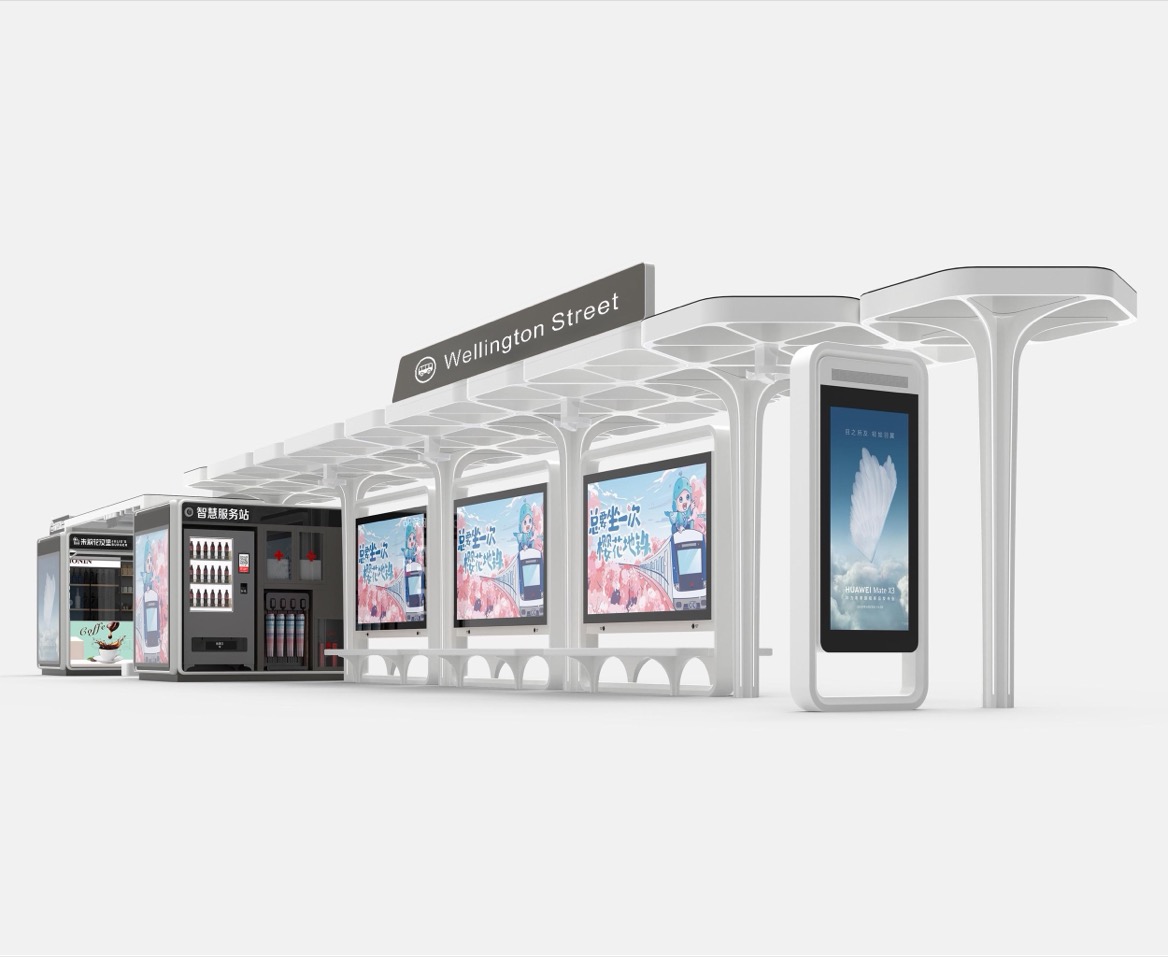
Sankyo Tateyama traces its origins to Sankyo Aluminium Industry, founded in 1960. Its corporate history also records the group restructuring that formed the present operating organization in 2012.
Its headquarters in Takaoka, Toyama, places it within one of Japan's established aluminum-processing regions.
Sankyo Alumi offers walkway shelters intended for public facilities, hospitals, shopping malls, and other public spaces. Its English product information states that these systems can be customized to site conditions and strength requirements.
This is relevant to projects seeking an aluminum shelter platform rather than a heavily customized advertising kiosk.
Potential applications include:
- Sheltered passenger approaches.
- Campus and hospital transport stops.
- Public facility waiting areas.
- Covered pedestrian connections.
The company operates across building fixtures, housing products, exterior fixtures, and processed aluminum products. Its shelter offering specifically addresses public and commercial environments.
The publicly documented customization scope concerns site fit and structural strength. It should not automatically be interpreted as private-label manufacturing or unrestricted OEM/ODM development.
Buyers should ask whether the proposed system supports:
- The required roof span and column layout.
- Advertising panels without structural modification.
- Integrated electrical equipment.
- Destination-specific finishes.
- Replacement parts for the intended service period.
A walkway shelter is not automatically a complete bus stop shelter package. Seating, passenger information, glazing, lighting, and advertising equipment may require separate specification and coordination.
Shikoku Kasei Holdings was established in 1947. Its building materials subsidiary, Shikoku Kasei Kenzai Corporation, was incorporated on January 11, 2022. These dates refer to different entities and should not be used interchangeably.
Shikoku's product documentation includes the Solid Roof A bus stop type. Its official download system lists three-sided configurations with aluminum-roof and polycarbonate-roof versions.
A dedicated bus stop configuration can simplify the initial specification process because the product category already addresses a passenger waiting application.
However, buyers must still confirm the exact model, roof material, structural rating, enclosure arrangement, and installation conditions.
The subsidiary's stated business includes manufacturing, processing, and selling architectural and civil engineering materials, together with related design and construction activities. Its broader product range covers residential and landscape exterior applications.
For bus shelter procurement, distinguish between:
- Selecting standard product options.
- Ordering approved dimensional modifications.
- Commissioning an entirely new design.
- Purchasing under another company's brand.
The reviewed sources establish the product offering but do not establish an unrestricted private-label OEM program.
The official group company page lists ISO 9001 and ISO 14001 certification. Buyers should still obtain the current certificates and confirm the covered sites and activities. A management-system certificate does not independently establish the structural performance of a particular shelter.
DAIKEN Co., Ltd., the Osaka-based metal building-products manufacturer associated with daiken.ne.jp, traces its origins to 1924. Buyers should distinguish it from similarly named Japanese building-material companies.
DAIKEN's professional download system includes CAD information for walkway shelter products. Its wider environmental exterior portfolio includes roof structures and related outdoor equipment.
CAD availability is useful because procurement teams and local designers can evaluate geometry, interfaces, and site fit before committing to a purchase.
DAIKEN primarily serves Japan's building-products market and also exports housing- and building-related products.
Its relevance to bus shelter procurement is conditional: a suitable walkway shelter may form part of a waiting-area solution, but the reviewed information does not establish a complete advertising bus shelter package or an open-ended OEM/ODM service.
Buyers should confirm:
- Whether the company approves the intended bus stop application.
- Whether seating and side panels can be integrated.
- Who provides structural calculations.
- Whether electrical additions affect warranty coverage.
- Which modifications require new engineering approval.
Treat DAIKEN as an adjacent shelter-system candidate rather than assuming direct equivalence with a specialist smart bus shelter manufacturer.
MCDecaux was established in October 2000. Its corporate profile identifies ownership by the JCDecaux group and Mitsubishi Corporation.
MCDecaux's B-Stop® model combines passenger shelter infrastructure with advertising media. Its published business description explains that advertising revenue supports infrastructure costs and reduces the financial burden on local authorities.
Its April 2026 announcement reports more than 850 B-Stop® shelters in Tokyo and an operating presence across 43 Japanese cities for B-Stop® and City Information Panels.
MCDecaux serves Japanese municipalities, transport operators, and advertisers. Its contracts have included shelter design, installation, maintenance, and operation.
Its customization model is therefore project- and concession-based. It is not equivalent to purchasing unbranded shelters from an OEM factory.
Relevant negotiations concern:
- Shelter design and placement.
- Advertising rights.
- Maintenance obligations.
- Cleaning and repair standards.
- Operating duration.
- Asset ownership and handover.
For a municipality, the central question is not simply the unit purchase price. It is whether the proposed advertising concession provides acceptable long-term public service, maintenance performance, and control over public-space assets.
A defensible specification should identify material grade, section dimensions, minimum thickness, finish, and verification method.
Depending on engineering requirements, tender documents may discuss structural steel grades, architectural aluminum alloys, or stainless steel options such as 304 and 316. These are specification examples—not a claim that one grade suits every Japanese site.
The purchasing rule is straightforward: require the engineer and supplier to justify the selected material against loading, exposure, fabrication, and maintenance requirements.
Request:
- Mill or material certificates linked to production batches.
- Actual wall-thickness measurements.
- Identification of load-bearing and decorative components.
- Approved substitutions and a formal change-control process.
A visually similar frame can conceal thinner sections or different alloys. Appearance alone is not an acceptance criterion.
"Powder coated" does not describe a complete protective system.
The purchase specification should address:
- Surface preparation.
- Pretreatment.
- Galvanizing where specified.
- Coating type and thickness.
- Treatment of cut edges and welds.
- Drainage and water traps.
- Isolation of dissimilar metals.
- Repair procedures after installation damage.
For coastal projects, require an exposure-specific proposal. Do not accept a salt-spray test duration as a direct promise of service life.
Shelters must be assessed for their installed location, not merely their shipping destination.
Ask the responsible engineer to define wind, snow, seismic, foundation, and anchorage assumptions as applicable. The package should identify who is responsible for the superstructure, foundation design, ground conditions, and installation inspection.
Adding a full-height advertising panel after structural approval can materially change the configuration being assessed. All major accessories should appear in the approved engineering drawings.
CE marking is required only where applicable European legislation mandates it. It is not a general international quality certificate or a substitute for Japanese requirements. RoHS concerns restrictions on substances in electrical and electronic equipment within its scope; it does not certify shelter structural strength.
For electrical products covered by Japan's Electrical Appliances and Materials Safety Act, METI identifies obligations relating to notification, technical conformity, inspection, and PSE marking. For imports, the Japanese importer has statutory responsibilities. Applicability must be checked for the actual equipment supplied.
For connected shelters, also establish who will assess the wireless and telecommunications equipment against applicable Japanese requirements.
Japan's road accessibility guidance addresses benches and shelters at applicable bus stops, subject to stated exceptions. Its application must be checked against the actual road, facility, and project circumstances.
The layout review should consider:
- A clear pedestrian route.
- Wheelchair waiting space.
- Visibility of approaching buses.
- Separation between seating and boarding movement.
- Detectable glazing.
- Maintenance access without blocking passenger circulation.
A major avoidable risk is the gap between factory supply and site construction.
A shelter can pass factory inspection and still become difficult to install if anchor positions, foundation levels, buried services, or cable entries do not match the approved structure.
This problem is easy to miss because procurement teams often focus on visible finishes and digital displays.
Before releasing foundations for construction, require a coordinated interface package containing:
1. Approved baseplate and anchor layouts.
2. Foundation and setting-out drawings.
3. Anchor installation tolerances.
4. Finished-ground and drainage levels.
5. Cable entry locations.
6. A clear division of design responsibility.
Use an agreed anchor template or survey method where appropriate. Make foundation acceptance a documented hold point before shipment or installation.
This is a practical risk-control recommendation, not a claim based on unpublished customer failure statistics.
Ask the supplier to distinguish in-house fabrication from outsourced galvanizing, coating, glazing, electronics assembly, and structural design.
For Ainl or another international manufacturer, a live factory review should follow a real order through cutting, bending, welding, finishing, assembly, inspection, and packing—not only show a showroom.
For a customized shelter, the approval sequence should normally include:
1. Technical specification agreement.
2. Drawing and component approval.
3. Material and finish samples.
4. Prototype or first-article assembly.
5. Dimensional and functional inspection.
6. Closure of nonconformities.
7. Authorization for batch production.
For illuminated or digital shelters, include service access, cable routing, thermal management, and replaceability in the inspection plan.
Request separate pricing for:
- Structures and accessories.
- Engineering and tooling.
- Prototype production.
- Export packaging.
- Freight and insurance.
- Import clearance responsibilities.
- Inland delivery and unloading.
- Foundations and installation.
- Commissioning and initial spares.
Specify the named place and applicable Incoterms version. Do not assume that a freight-inclusive quotation includes customs clearance, lifting equipment, installation, or site approvals.
For modular shipments, require numbered components, packing lists, assembly drawings, and a process for replacing transport-damaged panels.
Japan-focused bus shelter procurement offers several distinct routes.
Ainl is a relevant China-based option for buyers seeking extensive custom manufacturing support. Sankyo Alumi and Shikoku Kasei Kenzai offer established Japanese shelter or exterior-product capabilities. DAIKEN merits consideration where a walkway shelter platform fits the application. MCDecaux addresses a different requirement: advertising-funded infrastructure and long-term operation.
A productive tender starts with one coordinated specification covering structure, foundations, finishes, accessibility, electrical systems, maintenance, and acceptance testing.
For a custom project, send Ainl your site drawings, required quantities, environmental conditions, branding requirements, and electrical configuration. Request an itemized proposal, an engineering responsibility matrix, and a first-article approval plan before authorizing production.
Obtain the complete certificate, including its number, legal entity, site addresses, scope, issuing certification body, and validity dates.
IAF CertSearch supports checking certificate status, including active, suspended, withdrawn, and expired records. Match the result to the actual contracting entity and manufacturing site. If the record is missing or inconsistent, contact the issuing certification body directly rather than reaching an immediate conclusion.
No. CE marking addresses applicable European legislation. It does not automatically establish compliance in Japan.
Review the actual electrical equipment against Japan's requirements, including PSE obligations where applicable. Structural suitability, installation approvals, accessibility, and connected-device requirements need separate assessment.
That depends on the supplier and design.
Separate the prototype price from the production price. Ask whether engineering, tooling, special extrusion dies, software configuration, and testing are included.
None of the reviewed sources establishes a universal one-unit MOQ for the manufacturers in this guide. Obtain a written quotation specifying prototype ownership, revision allowances, and the conditions for moving to batch production.
Attach a controlled bill of materials to the contract.
Identify material grades, minimum thicknesses, glazing specifications, coating systems, electrical component models, and acceptable alternatives.
Require written approval before substitution. Link inspection records to production batches, and make material verification part of pre-shipment acceptance—not merely sample approval.
Require an energy budget rather than accepting a panel wattage alone.
The proposal should account for lighting hours, display consumption, communications equipment, charging losses, battery usable capacity, shading, and seasonal conditions.
Ask the supplier to explain performance during low-sun periods, battery replacement procedures, and what functions remain available when stored energy becomes limited. A solar lighting shelter and a continuously operating digital advertising shelter should not be evaluated as the same electrical load.
- Ainl company introduction: manufacturing history, product scope, customization, and company-reported facilities. [ainlgroup]
- JETRO regional investment information: Toyama's aluminum and metalworking industrial cluster. [jetro.go]
- Sankyo Tateyama corporate brochure and Sankyo Alumi shelter information: corporate history and public-space shelter applications. [exteriorworld]
- Shikoku official corporate and product information: subsidiary incorporation, listed management-system certifications, and bus stop shelter configurations. [download.shikoku.co]
- DAIKEN product resources: walkway shelter CAD and environmental exterior product categories. [pro.daiken.ne]
- MCDecaux corporate profile and April 2026 announcement: establishment, operating model, and disclosed network figures. [mcdecaux.co]
- MLIT accessibility report, published February 24, 2026: fiscal 2024 results measured as of March 31, 2025. [mlit.go]
- MLIT road accessibility guidance: applicable provisions concerning bus stop benches and shelters. [mlit.go]
- METI Electrical Appliances and Materials Safety Act guidance: importer responsibilities and applicable PSE obligations. [meti.go]
- European Commission guidance: CE marking scope and RoHS requirements. [europa]
- IAF CertSearch verification guide: checking accredited management-system certificate status. [support.iafcertsearch]


