
Email: ainlbusshelter@gmail.com | WhatsApp: +86-18800607527
Views: 233 Author: Ainl Bus Shelter Publish Time: 2026-08-04 Origin: Site


Content Menu
● Smart Bus Shelter vs Conventional Bus Shelter: The Core Differences
● Feature Comparison at a Glance
● Why Passenger Experience Improves with Digital Infrastructure
● Real-World Deployments: What Cities Are Building Right Now
● Market Growth Confirms the Shift Toward Smart Infrastructure
● Solar Power and Sustainability: Cutting Long-Term Operating Costs
● OEM and ODM Customization: A Practical Checklist for Procurement Teams
● Choosing a Manufacturing Partner for Smart Public Transit Infrastructure
● Getting Started: A Clear Next Step for Transit Planners
Public transit agencies worldwide are rethinking the humble bus stop. What used to be a simple roof and a bench is now a data point in a city's mobility network. Comparing a smart bus shelter with a conventional bus shelter is no longer just about aesthetics; it is about how digital infrastructure at street level changes waiting time, safety, and revenue for transit operators. This article breaks down the functional, financial, and design differences between the two shelter types, backed by market data and real deployment case studies, so planners, procurement officers, and manufacturers can make an informed choice for their next public transit project.
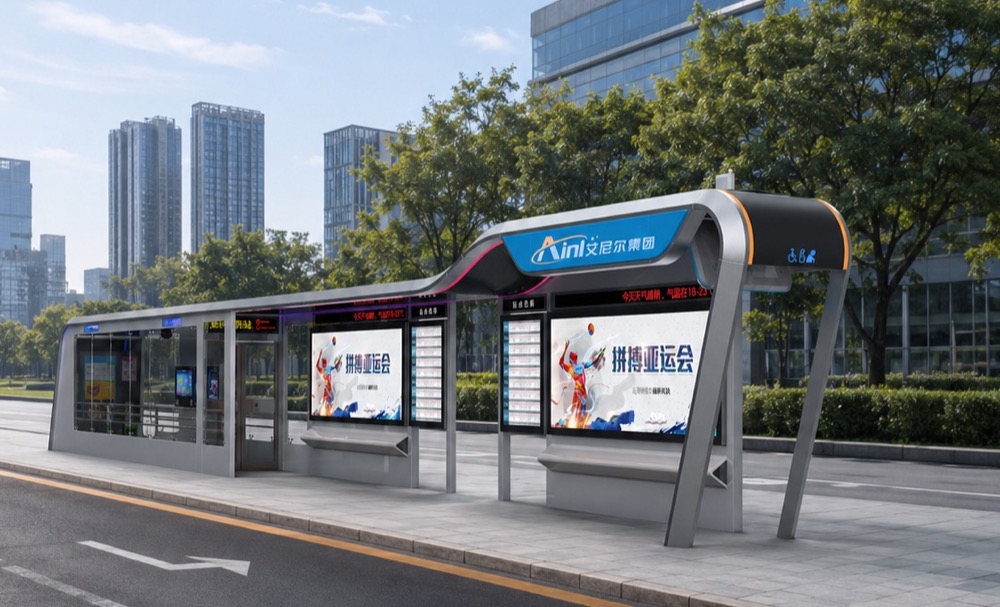
A conventional bus shelter is a passive structure. It typically offers a roof, a bench, and sometimes a static advertising panel. It protects riders from rain and sun but tells them nothing about when the next bus is coming.
A smart bus shelter is an active node in the transit network. It layers digital technology onto the same basic frame, including:
- Real-time arrival displays connected to the transit operator's GPS feed
- LED or LCD digital advertising panels that generate revenue for the city
- Solar panels and battery storage for off-grid power
- USB and wireless charging ports for passenger devices
- Free Wi-Fi and environmental sensors that track air quality and noise
- CCTV and emergency SOS buttons for passenger safety
- Smart lighting that adjusts brightness based on occupancy
The physical shell, whether stainless steel, aluminum, or tempered glass, is often nearly identical between the two shelter types. The real distinction lies in the electronics, connectivity, and power systems layered inside the structure.
| Feature | Conventional Bus Shelter | Smart Bus Shelter |
|---|---|---|
| Passenger information | Printed timetable only | Real-time arrival and route data |
| Lighting | Standard fixed LED or none | Motion-adaptive, solar-powered LED |
| Power source | None (grid-optional) | Solar panels with battery backup |
| Advertising | Static poster panel | Digital signage with remote updates |
| Safety features | None or basic CCTV | SOS button, live camera feed, alert lighting |
| Connectivity | None | Wi-Fi, IoT sensors, 5G-ready modules |
| Upfront cost | Lower | Higher, offset by ad revenue and energy savings |
| Typical lifespan | 15–20 years | 10–15 years for structure; electronics upgraded on cycle |
Waiting for a bus without information feels longer than it actually is. Digital infrastructure removes that uncertainty. Industry research indicates that roughly 61% of commuters prefer smart shelters specifically for the combination of safety, comfort, and digital amenities they provide, while 63% of surveyed cities are already integrating digital displays and real-time passenger information into their shelter networks.
Passenger satisfaction data from major transit systems reinforces this shift. In Chicago, satisfaction among CTA riders dropped to 70% in 2025, down from 75% in 2022, signaling that agencies need to actively invest in rider experience rather than assume loyalty will hold steady. Digital shelters directly address several pain points behind declining satisfaction scores: uncertainty about arrival times, safety concerns after dark, and discomfort during long waits.
Three experience factors consistently improve when a shelter goes digital:
1. Reduced perceived wait time through live countdown displays and service alerts.
2. Increased perceived safety via lighting, cameras, and one-touch emergency contact.
3. Higher accessibility through audible announcements and digital wayfinding.
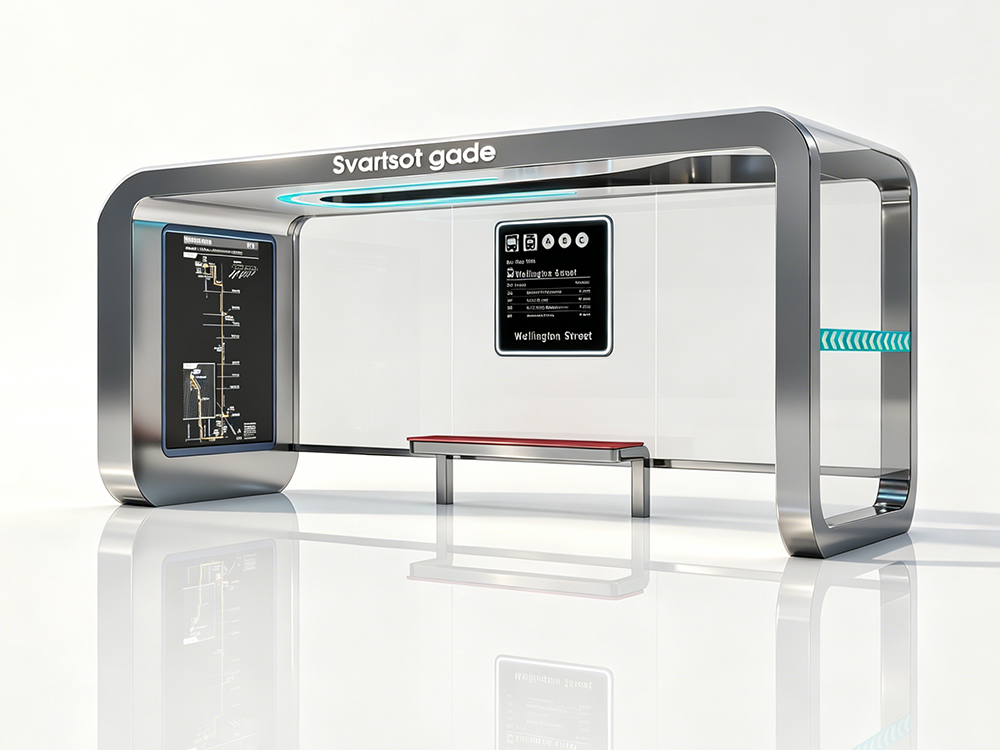
Theory is one thing; deployed infrastructure is another. Several transit agencies have already published results from their smart shelter rollouts.
Los Angeles, United States. The Sidewalk and Transit Amenities Program has installed the first 150 of 3,000 planned modular shelters, each combining an e-ink display for real-time updates with a smart city light that signals emergencies through color changes. The redesigned canopy delivers 35% more shade than the shelters it replaces and already serves close to 64,000 transit riders every weekday.
Albuquerque, United States. ABQ RIDE redesigned its Central Avenue shelters after noticing that older, enclosed designs encouraged loitering and vandalism. The new open-frame "Smart Shelter" model adds solar LED lighting and real-time arrival screens at high-ridership stops. Officials reported an immediate drop in loitering once the open, well-lit design was tested at a single intersection, before the citywide rollout of 55 replacement units began.
Nottingham, United Kingdom. A 15-year contract awarded to a major outdoor infrastructure operator is refurbishing the city's bus shelters with free public Wi-Fi and real-time air quality monitoring sensors, folding environmental data collection directly into everyday transit infrastructure.
Gdynia, Poland. A solar-powered shelter fitted with a remotely managed e-paper display generates measurable operating savings, estimated at 5,000 to 7,000 Polish złoty per year in reduced energy costs versus grid-connected alternatives, since e-paper panels and remote content updates draw minimal power .
The financial case for digital shelters is now backed by clear market trajectories. The intelligent bus shelter segment was valued at roughly USD 1.2 billion in 2024 and is projected to reach USD 2.03 billion by 2032, growing at a compound annual rate of 8.9% . A separate analysis of the broader smart bus shelter category projects growth from roughly USD 0.61 billion in 2026 to USD 1.45 billion by 2035, a compound annual growth rate of about 10.1%.
Regional adoption is uneven but instructive for manufacturers targeting export markets:
- Europe currently holds the largest share of the smart shelter market, close to 44%, driven by sustainability mandates and public-private financing models.
- Asia-Pacific is the fastest-growing region, at roughly 36% growth, propelled by rapid urbanization and large government-backed smart city programs.
- The top five manufacturers worldwide control about 47% of global market share, leaving substantial room for specialized regional suppliers with strong customization capability.
Solar integration is where a smart bus shelter earns back its higher upfront price over time. A shelter fitted with photovoltaic panels, a battery bank, and a smart energy management controller can run lighting, displays, and charging ports without any grid connection, which matters for remote or budget-constrained municipal networks.
The energy management logic typically works in three stages:
1. Photovoltaic panels capture daylight and convert it to direct current electricity.
2. A charge controller stores surplus energy in rechargeable batteries for use at night or during low sunlight.
3. An inverter and smart controller allocate power dynamically, dimming displays or lighting when the shelter is unoccupied to extend battery life.
European transit data shows that roughly 58% of urban areas across the continent are actively adopting solar-powered and energy-efficient smart shelters, reflecting how quickly this feature has moved from novelty to standard specification.
Every city has different climate conditions, branding requirements, and budget constraints, which is why customization has become a deciding factor when agencies select a shelter manufacturer. Procurement teams should work through the following steps before issuing a tender:
1. Define the display configuration first. Screen size (commonly 40 to 75 inches), touch capability, and content management software all affect structural load and power draw.
2. Match structural materials to the local climate. Coastal cities need corrosion-resistant coatings; high-wind regions need reinforced steel framing and wind-load calculations.
3. Specify the power strategy early. Decide between grid-tied, fully solar, or hybrid power before finalizing the shelter footprint, since battery and panel sizing changes the roof design.
4. Lock in branding elements. Logo placement, color palette, and wayfinding typography should be finalized with the manufacturer's design team before production drawings are approved.
5. Confirm compliance requirements. Structural safety testing, electrical certification, and accessibility standards vary by country and should be verified against the manufacturer's existing qualifications.
6. Request 3D renderings and load calculations before ordering. A credible manufacturer provides CAD drawings and structural stress data before manufacturing begins, not after.
Not every supplier that advertises "smart" shelters has the in-house capacity to deliver structural durability and electronics integration at the same time. Buyers should look for manufacturers with in-house sheet metal fabrication, dedicated coating facilities, and electrical testing laboratories, rather than assemblers who outsource core components.
Manufacturers with a documented history in both structural and municipal engineering tend to deliver more reliable installations at scale. Established Chinese producers such as Ainl, which has spent 16 years manufacturing smart city public facilities and holds national high-tech enterprise status alongside steel structure and municipal engineering contracting qualifications, illustrate the kind of production depth that supports large, multi-city rollouts: CNC sheet metal precision centers, large-scale coating lines, and dedicated electrical testing labs operating under one roof. That level of vertical integration matters most when a transit agency needs hundreds of shelters delivered on a tight installation schedule without inconsistent quality between batches.
Choosing between a smart bus shelter and a conventional bus shelter is really a choice about how much value a city wants to extract from its curb space over the next decade. If your agency is scoping a shelter upgrade program, request a detailed OEM or ODM proposal that includes structural drawings, power system options, and certification documentation before comparing supplier pricing. That single step prevents budget overruns and mismatched expectations later in the project.
1. What is the main difference between a smart bus shelter and a conventional bus shelter?
A conventional bus shelter only offers physical protection from weather, such as a roof and bench. A smart bus shelter adds digital technology, including real-time arrival displays, solar power, Wi-Fi, and safety features like CCTV and emergency buttons.
2. How much more does a smart bus shelter cost compared to a traditional one?
Upfront costs are typically higher for smart shelters because of the electronics, solar equipment, and digital displays involved. Digital advertising revenue and reduced energy costs often offset a significant portion of that difference over the shelter's operating life.
3. Can a smart bus shelter run entirely on solar power?
Yes. Shelters fitted with photovoltaic panels, battery storage, and smart energy management controllers can power lighting, displays, and charging ports without a grid connection, useful in areas with limited electrical infrastructure.
4. What safety features are typically included in a smart bus shelter?
Common features include CCTV surveillance, emergency SOS buttons, motion-activated lighting, and open-frame designs that improve visibility and discourage loitering or vandalism.
5. Can smart bus shelters be customized with a city's branding?
Yes. Reputable manufacturers offer OEM and ODM services covering shelter dimensions, colors, logos, screen configuration, and lighting systems, allowing cities to align new shelters with existing streetscape branding.
6. How long does a smart bus shelter typically last?
The structural frame usually lasts 10 to 15 years or longer depending on materials and climate exposure, while electronic components such as displays and sensors are generally upgraded on a shorter refresh cycle as technology evolves.
1. Skidmore, Owings & Merrill. "Award-Winning Bus Shelters Signal Equitable, Climate-Resilient Future for Los Angeles." [SOM Press Release]
2. City of Albuquerque. "Bus Shelters on Central Get Smart!" [City of Albuquerque Transit News]
3. Verified Market Research. "Intelligent Bus Shelter Market Size, Share & Forecast." [Verified Market Research]
4. Business Research Insights. "Smart Bus Shelters Market Growth Analysis 2026–2035." [Business Research Insights]
5. Regional Transportation Authority (Chicago). "What Transit Riders Are Telling Us: 2025 Customer Satisfaction Survey." [RTA Chicago]
6. SEEDiA. "Solar-Powered Bus Shelter with E-Paper Display, Gdynia Case Study." [SEEDiA Bus Shelter]


