
Email: ainlbusshelter@gmail.com | WhatsApp: +86-18800607527
Views: 277 Author: Ainl Bus Shelter Publish Time: 2026-08-16 Origin: Site


Content Menu
● What Is Bus Stop Shelter Advertising?
● Advantages of Bus Stop Shelter Advertisements
>> 1. Continuous Visibility in High-Dwell Locations
>> 2. Repetition Supports Brand Recall
>> 3. Strong Fit for Local and Contextual Campaigns
>> 4. Digital Displays Add Flexibility and Revenue Potential
>> 5. Bus Shelters Can Improve the Public Environment
● Disadvantages of Bus Stop Shelter Advertisements
>> 1. Exposure Is Broad, Not Automatically Precise
>> 2. Creative Space Is Limited
>> 3. Measurement Requires Planning
>> 4. Outdoor Hardware Must Be Designed for Real Conditions
● Static Posters vs. Digital Bus Shelter Displays
● How to Plan a Better Bus Shelter Advertising Campaign
>> Start With a Defined Objective
>> Select Locations by Behavior, Not Just Traffic
>> Design for the Three-Second Test
>> Build Measurement Into the Campaign
● Choosing a Bus Stop Shelter Manufacturer
>> Are bus stop shelter advertisements effective?
>> How long should a bus shelter advertising campaign run?
>> What makes a bus shelter advertisement easy to read?
>> Can outdoor LCD or LED displays be used in bus shelters?
>> How can advertisers measure bus shelter advertising results?
>> What should cities consider before installing advertising bus shelters?
Bus stop shelter advertisements can deliver high-frequency, location-based visibility where people wait, walk, transfer, shop, and commute. For brands, agencies, transit operators, and city planners, the real question is not simply whether bus shelter advertising works—it is whether the location, creative, display format, and measurement plan fit the campaign objective.
Unlike advertising that can be skipped, muted, or quickly scrolled past, a bus shelter display becomes part of the daily streetscape. A well-designed static poster or outdoor LED/LCD advertising display can reach the same people repeatedly along familiar routes while also serving pedestrians, riders, drivers, and nearby businesses.
However, bus stop advertising also has limitations. Broad exposure does not automatically create qualified leads, creative space is limited, and an unreliable display can undermine both public confidence and advertiser value. This guide explains the major pros and cons of bus stop shelter advertisements, plus the practical steps that help projects deliver stronger results.
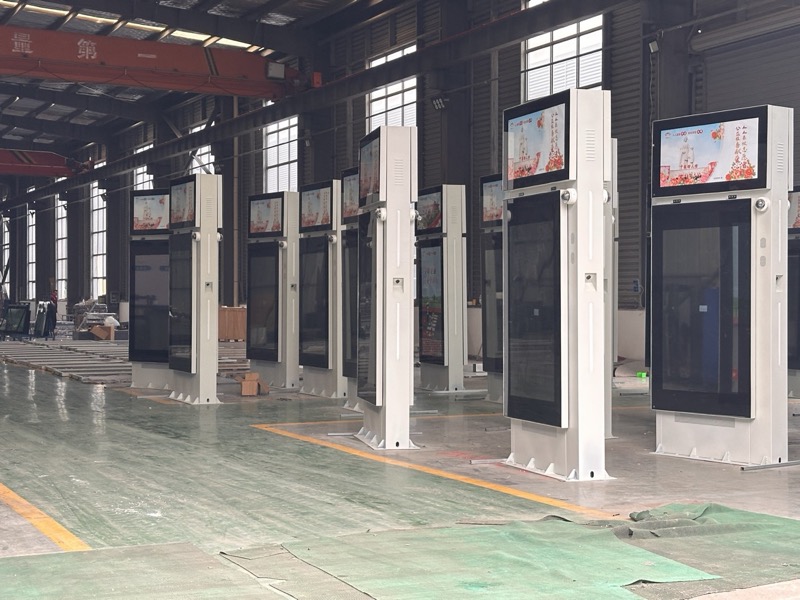
Bus stop shelter advertising is a form of out-of-home media placed on, inside, or integrated into public transit shelters. It may include:
- Printed posters in illuminated display panels
- Backlit advertising light boxes
- Digital LCD advertising screens
- Outdoor LED advertising displays
- Interactive information-and-advertising kiosks
- Branded shelter structures, seating, route maps, and wayfinding panels
Traditional formats typically display one campaign for a fixed period. Digital bus stop displays can rotate multiple advertisements, show real-time transit information, publish public-service announcements, and adapt content by time of day or local conditions.
For cities, the shelter is more than an advertising location. It is public infrastructure. The best projects combine passenger comfort, weather protection, visual order, accessibility, city identity, and commercial value in one durable structure.
A bus shelter advertisement can remain visible all day and night, subject to local lighting rules and operating conditions. Riders often wait several minutes, while pedestrians and nearby traffic may pass the location repeatedly.
This creates a useful difference from many fast-moving roadside placements: the audience may have time to actually read the message.
Bus shelters are especially valuable near:
- Retail streets and shopping districts
- Business parks and office clusters
- Hospitals and public-service facilities
- Schools, universities, and sports venues
- Tourism zones and transport hubs
- Dense residential communities
Repeated exposure can help build familiarity. A commuter taking the same route five days per week may encounter the same campaign many times, making bus shelter media particularly suitable for brand awareness, local launches, retail promotions, public campaigns, and directional messaging.
Daily travel routines create repeat viewing opportunities. People may see the same shelter when walking to work, waiting for a bus, returning home, or visiting nearby stores.
This repetition matters because outdoor advertising is often not designed to close a purchase immediately. Its role may be to make a brand, offer, location, or message easier to remember when the person later searches online, visits a store, or considers a purchase.
A simple campaign can work well when it includes:
- One clear benefit or message
- A recognizable logo or visual identity
- A short and readable headline
- A location cue, offer, or time-sensitive prompt
- A memorable website address, QR code, or campaign phrase
The goal is not to tell the whole brand story on one panel. It is to create a fast, repeatable mental association.
Bus shelter advertising is inherently local. A restaurant can advertise close to its branch. A property developer can target a neighborhood near a project. A city can promote a public program where residents are likely to encounter it.
This makes the medium useful for campaigns where place matters as much as audience profile.
For example, a fitness club located 300 meters from a bus stop can use a shelter panel to promote a free trial. The message can focus on a single action: "Get off here. Train today." A map cue or QR code can reduce friction for interested people.
Digital displays make this approach even more flexible. A screen can show breakfast offers during morning commuting hours, lunch promotions at midday, and entertainment messaging in the evening.
Outdoor LED/LCD advertising displays allow operators to schedule and rotate multiple campaigns on one screen. This can create more inventory than a single printed poster while allowing advertisers to update content without physical replacement.
Digital bus shelter displays can support:
- Time-based ad scheduling
- Daypart campaigns
- Multiple advertisers on one screen
- Emergency notices and public announcements
- Transit arrival information
- Weather-responsive or event-responsive messages
- Remote content management
- Proof-of-play records for campaign delivery
Programmatic digital out-of-home buying is also growing globally. The World Out of Home Organization estimated that programmatic digital out-of-home advertising generated approximately $1.4 billion globally in 2025, equivalent to 7% of total digital out-of-home spending. This direction reinforces the value of infrastructure that can support flexible, data-led campaigns rather than static-only inventory.
A well-engineered shelter can improve the passenger experience while creating a more consistent city image. This is especially relevant for municipal projects, transport authorities, property developments, and smart-city initiatives.
A functional shelter should provide more than ad space. It may include:
| Public-infrastructure feature | Value for users and operators |
|---|---|
| Rain and sun protection | Improves waiting comfort in changing weather |
| Seating and leaning rails | Supports older passengers, children, and people with limited mobility |
| Route information | Helps riders navigate with confidence |
| LED/LCD display integration | Combines public information and commercial media |
| Solar power option | Supports off-grid or low-energy deployment scenarios |
| Durable steel structure | Helps withstand frequent use and outdoor exposure |
| Custom branding elements | Aligns the facility with a city, district, or transport identity |
For public projects, visual quality matters. A cluttered, poorly maintained shelter can make a street look neglected. A clean, coordinated, and well-lit structure can strengthen the perceived quality of the surrounding environment.
A busy bus stop may generate significant visibility, but not everyone who sees the advertisement is a likely customer. This can be a weakness for products with a highly specialized audience, narrow geographic service area, or complex B2B buying process.
For example, an industrial equipment supplier may receive broad public exposure from a transit campaign but little direct sales value unless the placement is near an industrial park, trade event venue, logistics hub, or target business district.
The solution is not necessarily to avoid bus shelter advertising. It is to plan location selection carefully. Use local footfall, commuter behavior, nearby points of interest, and campaign goals to identify placements with a meaningful audience fit.
People often view a shelter advertisement while walking, waiting, driving past, or looking at a bus arrival display. The creative has only seconds to communicate.
Overloaded messages usually fail. Long paragraphs, too many product images, small contact details, and weak contrast make the advertisement hard to understand.
A practical rule is to build the creative around one message:
1. State the primary offer or benefit.
2. Use a strong visual with clear contrast.
3. Include one action, such as scanning a code, visiting a store, or remembering a launch date.
4. Keep fine print to an absolute minimum.
5. Test readability from the likely viewing distance.
For digital displays, also consider viewing angle, screen brightness, dwell time, refresh rate, and the duration of each creative loop.
Bus shelter advertising does not always provide direct, person-level conversion tracking. A person may see an ad today and purchase days later through another channel. That does not mean the campaign had no effect; it means the measurement framework must be established before launch.
Outdoor audience measurement commonly uses traffic counts, mobility data, visibility conditions, and audience modeling to estimate impressions, reach, and frequency.
Advertisers can strengthen measurement by using:
- A unique landing page or campaign URL
- QR codes with location-specific tracking
- Dedicated promotion codes
- Brand-search monitoring before and during the campaign
- Store-visit analysis where appropriate and permitted
- Matched-market tests
- Pre- and post-campaign awareness surveys
- Digital display proof-of-play reports
The strongest approach compares results against a baseline rather than treating every increase in visits or sales as automatically caused by the shelter campaign.
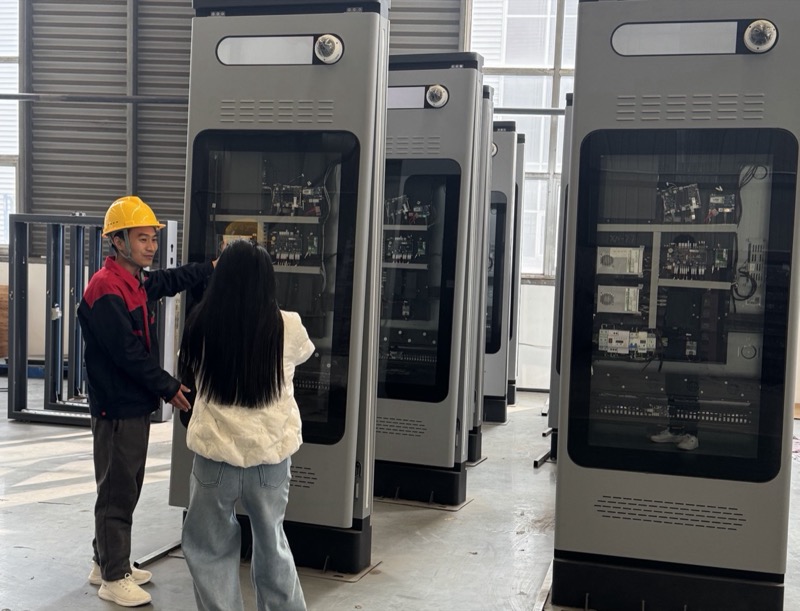
A beautiful display concept can become a costly maintenance problem if the shelter or screen is not engineered for the local environment. Outdoor installations face rain, heat, cold, dust, wind, ultraviolet exposure, vibration, vandalism risk, and frequent public use.
For outdoor LED/LCD advertising displays, buyers should evaluate:
- Enclosure weather resistance
- Temperature-control design
- Anti-corrosion coating quality
- Screen brightness for daylight visibility
- Glare management and night-time dimming
- Electrical protection and grounding
- Door locks and maintenance access
- Structural stability and wind-load considerations
- Remote monitoring capability
- Spare-parts and service support
Durability is not only a technical issue. It affects advertising revenue, public safety, operating costs, and the long-term reputation of the project.
The best format depends on budget, operating model, campaign needs, local regulations, and maintenance capacity.
| Factor | Static poster display | Digital LED/LCD display |
|---|---|---|
| Content updates | Requires physical replacement | Can be updated remotely |
| Number of advertisers | Usually one campaign per panel | Multiple campaigns can rotate |
| Initial investment | Typically lower | Typically higher |
| Operating complexity | Relatively simple | Requires power, software, connectivity, and maintenance |
| Public information use | Limited | Can support transit, emergency, and city information |
| Flexibility by time or event | Low | High |
| Revenue model | Fixed-term panel rental | Can support dynamic scheduling and multiple sales packages |
A hybrid approach often works well: use static panels for long-term high-visibility campaigns and digital screens for flexible inventory, city information, and time-sensitive communication.
Choose one primary purpose before selecting sites or designing the creative. Possible objectives include:
- Increasing local awareness
- Driving store visits
- Supporting a product launch
- Promoting a public-service message
- Building recognition for a new development
- Increasing event attendance
- Generating QR scans or website visits
Trying to achieve all objectives with one short ad usually creates a weak message.
High traffic is useful, but it is not the only decision factor. Review the surrounding context:
- Who uses the stop?
- How long do they wait?
- What direction do they face?
- Is the display visible from sidewalks, lanes, and nearby crossings?
- Are there retail, offices, schools, hospitals, or residential communities nearby?
- Is the location exposed to direct sun, rain, or high wind?
- Does the campaign need daytime, evening, or all-day visibility?
A lower-traffic site near the right audience can outperform a high-traffic site with poor relevance.
Ask someone unfamiliar with the campaign to view the creative briefly from a distance. If they cannot explain the main message after three seconds, simplify it.
A strong shelter advertisement normally includes:
- One dominant image or visual idea
- One concise headline
- One brand identifier
- One clear response path
For a digital display, ensure the first frame communicates the key message. Do not assume the viewer will stay long enough to watch a full sequence.
Decide how success will be judged before launch. For a retail campaign, that may mean store visits or offer-code use. For a brand campaign, it may mean reach, frequency, search uplift, and awareness change.
Where possible, use a control approach. Compare a market, area, or time period with the campaign against a comparable area without the campaign. Industry guidance for digital out-of-home measurement also recommends establishing baseline metrics, verifying delivery, defining attribution windows, and using control or holdout methods to assess incremental impact.
The advertising panel is only one component of a successful installation. Buyers should choose a manufacturer that understands both public infrastructure and outdoor media operations.
A qualified supplier should be able to support customization across:
- Shelter size and structural configuration
- Steel or aluminum fabrication requirements
- Advertising panel and screen specifications
- LED or LCD display integration
- Lighting and electrical systems
- Solar-powered options
- Color, finish, and city-branding elements
- Seating, route-map, and accessibility components
- Packaging, export support, and installation guidance
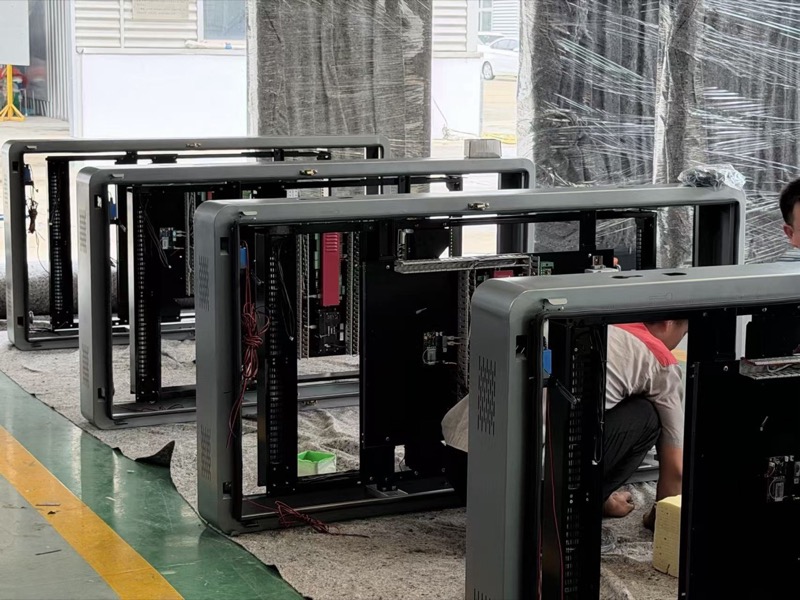
Ainl develops and manufactures outdoor LED/LCD advertising displays, bus shelters, and smart-city public facilities for transportation, municipal, commercial, and urban-development projects. With 16 years of industry experience, dedicated research and development resources, precision sheet-metal processing, large-scale coating capability, and electrical testing support, Ainl can provide OEM/ODM solutions tailored to project requirements.
If you are planning a bus shelter advertising project, contact Ainl to discuss your shelter structure, display configuration, power solution, branding requirements, and custom manufacturing needs.
They can be effective for building local awareness, increasing repeat exposure, supporting retail promotions, and reaching commuters or pedestrians near relevant locations. Effectiveness depends on site quality, creative clarity, campaign duration, audience fit, and measurement.
There is no universal answer. A longer campaign generally provides more repeat exposure, while short campaigns can work for limited-time offers or events. The right duration should reflect expected commuter frequency, budget, and whether the goal is awareness or immediate action.
Use a short headline, large type, strong color contrast, one main visual, and one clear call to action. Avoid dense copy and small details that cannot be read quickly from a sidewalk, road, or waiting area.
Yes. Digital displays can show rotating advertisements, public announcements, route information, and time-sensitive messages. However, they should be designed for outdoor brightness, temperature management, weather protection, power safety, and maintenance access.
Useful methods include estimated impressions, reach and frequency, QR-code scans, campaign URLs, promotional codes, store-visit analysis, search uplift, awareness surveys, and matched-market testing. Combining several methods gives a more reliable view than relying on one metric.
Cities should assess passenger safety, accessibility, sightlines, local planning requirements, lighting impact, structural strength, maintenance responsibilities, advertising policies, and how the shelter design fits the city's visual identity.
- [Handi-Hut — Pros and Cons of Bus Stop Shelter Advertisements]
- [Broadsign — What Is Out-of-Home Advertising?]
- [AdQuick — The Complete Guide to Programmatic DOOH Advertising]
- [Adams Outdoor — What Is Out of Home Advertising?]
- [Billboard Insider — WOO Estimated Global Programmatic Spend at $1.4 Billion]
- [PLOS Climate — Outdoor Media Strategies for Increased Engagement]


