
Email: ainlbusshelter@gmail.com | WhatsApp: +86-18800607527
Views: 217 Author: Ainl Bus Shelter Publish Time: 2026-09-05 Origin: Site


Content Menu
● Understanding the Two Solutions
>> What Is an Outdoor Planter Box?
>> What Is a Concrete Landscape Barrier?
● Outdoor Planter Box vs Concrete Landscape Barrier
● When Outdoor Planter Boxes Add More Value
>> 1. Improving Streetscape Comfort
>> 2. Supporting Municipal Identity
>> 3. Managing Runoff in Constrained Sites
● When Concrete Landscape Barriers Are the Better Choice
>> 1. Creating Strong Public-Space Boundaries
>> 2. Reducing Replacement Risk in High-Abuse Areas
>> 3. Supporting Security-Oriented Design
>> Site Speed and Vehicle Exposure
● A Better Approach: Combine Planters and Barriers
● Practical Selection Checklist
● FAQ
>> 1. Can an outdoor planter box replace a concrete landscape barrier?
>> 2. Are concrete landscape barriers suitable for pedestrian plazas?
>> 3. Which option is better for bus stop areas?
>> 4. Can outdoor planter boxes support stormwater management?
>> 5. Which solution requires less maintenance?
>> 6. Can planter boxes be customized with city logos and lighting?
>> 7. What should buyers ask a manufacturer before ordering?
When municipalities, developers, transit operators, and commercial property owners upgrade streetscapes, plazas, bus stops, pedestrian zones, and mixed-use districts, the choice between an outdoor planter box and a concrete landscape barrier has a direct effect on safety, visual identity, maintenance workload, and long-term public value.
Both products can define space, guide pedestrian movement, and improve the appearance of an urban environment. However, they serve different primary purposes. An outdoor planter box is usually the better choice when a project needs greenery, placemaking, flexible zoning, and stormwater-oriented landscape design. A concrete landscape barrier is generally more suitable where robust physical separation, traffic control, perimeter protection, and low-maintenance durability are the leading priorities.
For public-space planners, the most effective answer is often not choosing one product over the other. It is designing a coordinated streetscape system in which planters create comfort and identity while barriers provide clearly engineered protection where it is needed.
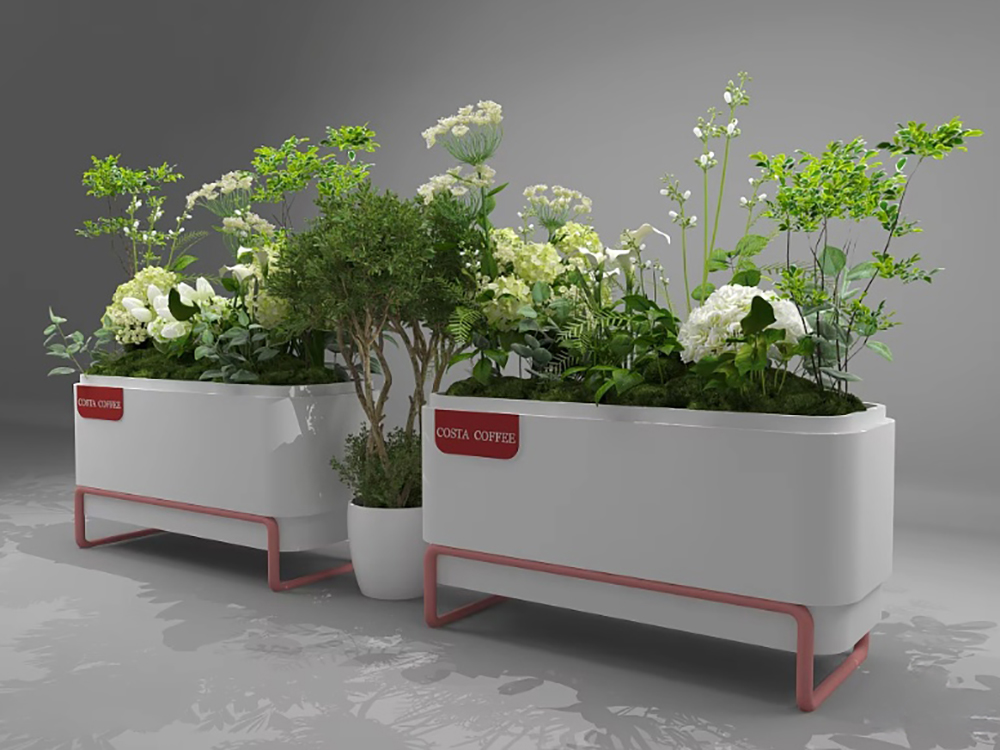
An outdoor planter box is a freestanding or built-in container designed to hold soil, plants, shrubs, small trees, or integrated landscape systems. In urban projects, planter boxes can be manufactured from galvanized steel, aluminum, stainless steel, weathering steel, fiberglass, concrete, wood-look composite materials, or mixed materials.
Modern commercial outdoor planter boxes are not simply decorative flower containers. They can become functional streetscape components that help separate walking and vehicle areas, organize seating zones, frame bus shelters, soften hardscape surfaces, and support a city's visual identity.
For dense urban areas, engineered stormwater planter boxes may also be designed as bioretention systems. These systems can collect runoff from sidewalks, parking areas, and streets, then direct water through planting media, gravel layers, and drainage components. The U.S. Environmental Protection Agency identifies planter boxes as a type of green infrastructure suitable for constrained urban sites and notes that stormwater planters can help collect and treat runoff from surrounding impervious surfaces.
A concrete landscape barrier is a heavy, durable structure used to establish physical boundaries in outdoor environments. It may take the form of low walls, modular blocks, precast vehicle barriers, traffic separators, retaining-style elements, decorative perimeter walls, or large concrete units integrated into plaza and road-edge designs.
Unlike a standard planter, the main strength of a concrete landscape barrier is its mass, permanence, and structural presence. It can be used to separate pedestrian zones from vehicle lanes, protect building frontages, define restricted-access areas, guide traffic, and establish durable edges around public landscapes.
However, it is important to distinguish a decorative concrete landscape barrier from a tested vehicle-security product. If a project requires vehicle-impact resistance, anti-ram protection, or formal perimeter-security performance, planners should specify independently tested systems that meet the relevant project requirements. The Federal Highway Administration recommends verifying independent performance testing for vehicle security barriers against applicable standards, including ASTM F2656/F2656M where relevant.
The following comparison helps project owners identify which solution best fits their site conditions, public-space goals, and operating requirements.
| Comparison Factor | Outdoor Planter Box | Concrete Landscape Barrier |
|---|---|---|
| Primary role | Adds greenery, defines space, improves comfort, supports branding | Creates strong physical separation and durable site boundaries |
| Visual impact | Soft, welcoming, adaptable, and landscape-oriented | Solid, permanent, architectural, and protective |
| Pedestrian experience | Can make streets and waiting areas feel more human-centered | Can improve perceived order and separation but may feel heavy if overused |
| Traffic separation | Suitable for low-speed visual guidance and space definition | Better suited to robust edge definition and vehicle-pedestrian separation |
| Security use | Not automatically a vehicle-security solution | May offer physical resistance, but must be specifically engineered and tested for security applications |
| Stormwater potential | Can support bioretention and runoff management when engineered accordingly | Generally does not treat stormwater unless combined with drainage or planting systems |
| Customization | High flexibility in size, finish, color, planting, lighting, logos, and screen integration | Custom shapes and finishes are possible, but later changes are more difficult |
| Relocation | Modular units can be relocated or reconfigured | Usually difficult and expensive to move once installed |
| Maintenance | Requires planting, irrigation, drainage inspection, and seasonal care | Requires periodic inspection, cleaning, repair, and surface maintenance |
| Long-term atmosphere | Best for hospitality, transit comfort, public realm quality, and destination identity | Best for durable control, protection, formal boundaries, and high-abuse environments |
An outdoor planter box is particularly effective when the project goal is to make public space feel more comfortable, greener, and more inviting.
Many urban corridors contain large areas of paving, glass, metal, signage, and traffic infrastructure. A well-designed planter box introduces vegetation at eye level, creating a more pleasant pedestrian experience without requiring a large in-ground landscape area.
This is especially useful around:
- Bus stop shelters and transit interchanges
- Commercial streets and shopping districts
- Hotel entrances and office plazas
- Pedestrianized streets
- Outdoor dining zones
- Public squares and civic spaces
- School and hospital entrances
- Waterfront promenades
- Mixed-use residential developments
Green infrastructure can contribute to better-quality public environments by adding vegetation to dense areas that may otherwise have limited access to natural elements. Research and public-sector guidance associate urban green spaces with benefits such as improved well-being, reduced stress, stronger social ties, reduced noise, and more opportunities for outdoor activity.
For a transit project, for example, planters can make a waiting zone feel less exposed and more comfortable. Instead of placing passengers beside a bare curb and a metal shelter, the project can combine a bus stop shelter, seating, route information, lighting, branded planter boxes, and low planting. The result is a more recognizable and welcoming public-service environment.
Outdoor planter boxes provide a practical surface for city branding and place-based design. Their panels, colors, shapes, laser-cut patterns, and integrated lighting can reflect local cultural elements or the visual language of a public transport network.
A city may use:
- Powder-coated colors that match its transit system
- Perforated metal panels inspired by local landmarks
- Laser-cut district names or public messages
- Seasonal planting palettes
- Integrated logo panels
- Digital display zones for public information
- Solar-powered lighting modules
- QR-code panels for tourism, wayfinding, or service information
For public-sector buyers, this flexibility matters because infrastructure should do more than occupy space. It should reinforce the visual consistency of the city.
Ainl's manufacturing capabilities are relevant to this type of integrated requirement. With in-house sheet-metal fabrication, surface finishing, electrical testing, and software-and-hardware development support, the company can help project teams coordinate product dimensions, structural details, colors, lighting systems, display configurations, solar options, and city-branding elements into a cohesive outdoor-furniture solution.
A properly engineered planter box can serve a role beyond decoration. In suitable site conditions, stormwater planters can temporarily collect runoff from nearby paved surfaces and filter it through soil, sand, gravel, vegetation, and drainage layers.
The EPA describes stormwater planters as vertical-walled bioretention systems commonly used in downtown environments. Depending on the design, runoff can infiltrate into the ground or move through an underdrain after filtration.
This makes planter boxes particularly valuable in projects where land is limited but landscape performance is still important.
Before selecting this approach, the project team should assess:
- Local rainfall patterns
- Drainage capacity
- Soil permeability
- Waterproofing requirements
- Overflow pathways
- Irrigation access
- Plant suitability
- Maintenance resources
- Municipal stormwater regulations
A decorative planter should not be presented as a drainage solution unless it includes the correct internal layers, drainage design, overflow provisions, and site connection details.
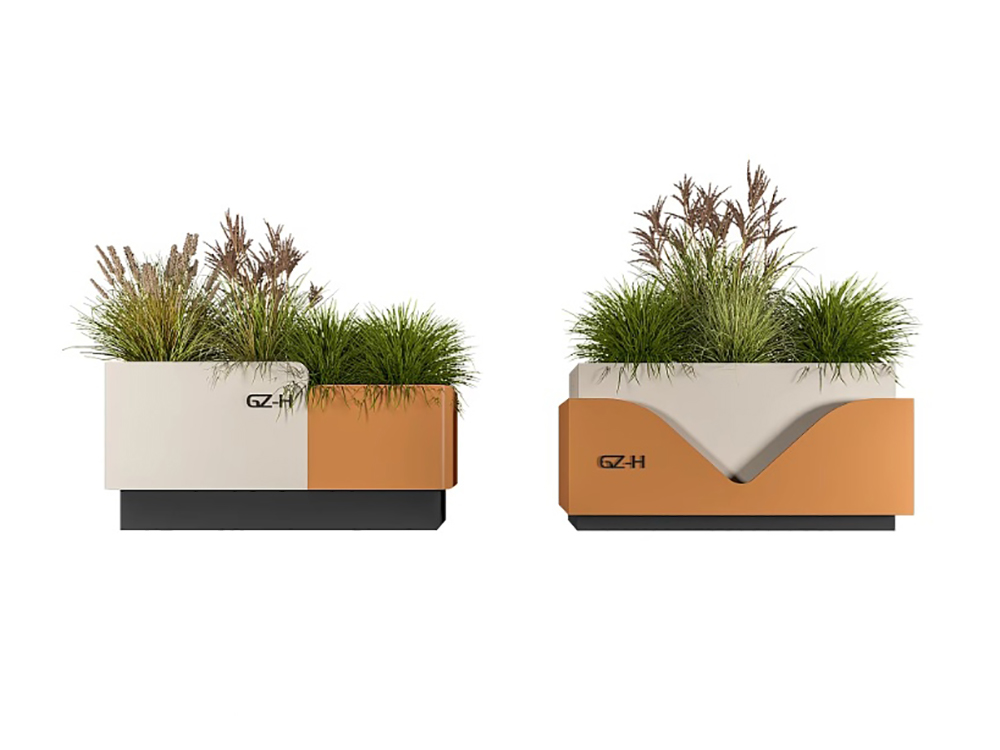
Concrete landscape barriers are often the more appropriate selection when the key objective is durable separation rather than visual softening.
Concrete barriers work well where a site needs a permanent edge between people and vehicles. Typical applications include road medians, loading zones, parking entrances, building perimeters, pedestrian plazas, logistics areas, and spaces near high-traffic roadways.
Their weight and solidity can help communicate that a boundary is not optional. This is valuable when visual cues alone are unlikely to control vehicle movement or public behavior.
Concrete barriers can be particularly practical for:
- Parking-lot separation
- Road-edge protection
- Service-lane control
- Vehicle exclusion zones
- Public-square perimeters
- Construction-adjacent pedestrian routes
- Freight or delivery areas
- Long-term landscape borders
- Areas vulnerable to impact, vandalism, or heavy use
In heavily used public environments, lightweight fixtures may be exposed to accidental vehicle contact, skateboard damage, graffiti, tampering, and repeated impact from maintenance equipment.
A concrete landscape barrier is inherently robust. It is less likely to be displaced, stolen, or damaged by ordinary daily use. In locations where long-term stability outweighs flexibility, this may reduce the need for frequent replacement.
That said, concrete is not maintenance-free. Cracking, staining, surface spalling, exposed reinforcement, drainage issues, and settlement should still be monitored. Poor installation can cause a heavy barrier to tilt, shift, or create trip hazards over time.
Where projects involve sensitive facilities, transport hubs, public events, government buildings, or high-pedestrian-volume plazas, physical protection should be considered early in the design process.
The design principle is simple: beauty and protection should work together rather than compete.
A plain concrete barrier may provide visual separation, but it should not be assumed to meet a defined vehicle-impact requirement. For formal protective applications, designers should select systems based on the specific threat scenario, vehicle type, speed, impact angle, site geometry, foundation condition, and required performance standard.
FHWA guidance emphasizes the importance of verifying independent testing for vehicle security barriers. This is why public-space buyers should avoid relying on product weight, appearance, or supplier claims alone when safety performance is a core project requirement.
The strongest procurement decisions do not begin with material preference. They begin with the operating reality of the site.
Ask one essential question first: Will vehicles be able to enter this area, and at what speed?
If vehicles are nearby but moving slowly, planters may help define space when combined with curbs, bollards, pavement changes, signage, and sensible circulation design.
If the location faces higher-speed vehicle exposure or requires formal security protection, a dedicated and properly specified barrier system is more appropriate. In many cases, decorative planters should be placed behind a protective line rather than expected to provide the primary protective function.
A planter box creates an ongoing operational commitment. It needs irrigation, pruning, replanting, fertilization, drainage checks, cleaning, and seasonal management. If these resources are not available, plants can decline and turn a premium streetscape asset into a neglected visual problem.
Concrete barriers require less horticultural care, but they may still need surface cleaning, graffiti removal, crack repair, and inspection after vehicle contact.
A useful rule is this:
- Choose planter boxes when the site owner can sustain a landscape-maintenance program.
- Choose concrete barriers when the site needs a durable, low-intervention boundary.
- Choose a combined system when the project needs both comfort and protection.
Urban spaces change. A street that is vehicle-oriented today may become a pedestrian plaza in the future. A seasonal market may require a different layout from a normal weekday. A bus stop may later add digital information screens, solar lighting, or expanded seating.
Modular outdoor planter boxes offer better flexibility for phased development, temporary activation, seasonal programming, and future reconfiguration. Concrete barriers are more suitable for long-term, stable site layouts where change is unlikely or undesirable.
For many smart-city and commercial public-realm projects, the best solution is a layered design.
Use a properly engineered barrier system where safety and vehicle control are essential. Then use outdoor planter boxes to improve the public-facing side of the environment.
This approach can create:
- A secure perimeter without a fortress-like appearance
- Greener pedestrian waiting areas
- Clear vehicle and pedestrian circulation
- Opportunities for city branding
- Integrated lighting and signage
- More comfortable transit and commercial zones
- A coordinated appearance across multiple sites
For example, a city-center transit corridor could use robust roadside protection at key vehicle-exposure points, followed by planter boxes near shelters and seating areas. The barrier performs the protection role. The planter improves the human experience. The bus shelter delivers weather protection, lighting, passenger information, and public-service visibility.
This type of coordinated system is more effective than expecting one product to solve every design problem.
Before purchasing an outdoor planter box or concrete landscape barrier, project teams should define the following requirements.
1. Clarify the primary objective. Is the main goal greenery, branding, pedestrian comfort, traffic separation, security, drainage, or all of these?
2. Review site conditions. Measure available width, underground utilities, pavement loading, slopes, drainage paths, curb conditions, and vehicle access.
3. Identify safety requirements. Determine whether the project needs visual guidance, physical separation, or independently tested vehicle-impact protection.
4. Plan for maintenance. Confirm who will clean, inspect, irrigate, prune, repair, and replace components after installation.
5. Specify customization needs. Define dimensions, material, finish, color, planting depth, drainage, lighting, display modules, solar equipment, logos, and wayfinding elements.
6. Consider lifecycle value. Compare not only the initial purchase price, but also installation, relocation, maintenance, planting, repair, and replacement costs.
7. Coordinate the product family. Select planters, bus shelters, benches, bins, signage, screens, and barriers that share a unified visual language.
Choose an outdoor planter box when your urban public space needs greenery, comfort, flexible zoning, environmental value, and a stronger sense of place. It is ideal for bus stops, commercial streets, plazas, campuses, pedestrian corridors, and smart-city projects that need people-centered design.
Choose a concrete landscape barrier when your priority is durable separation, long-term perimeter definition, traffic control, or a more robust physical boundary. It is especially suitable for road edges, parking areas, service zones, high-abuse locations, and sites where relocation is not expected.
For the best overall urban result, combine both. Use engineered protective elements where safety demands them, then add planter boxes, shelters, lighting, signage, and branded public furniture to create a public space that is secure, durable, and genuinely pleasant to use.
Planning a custom urban-furniture or public-space project? Ainl can support OEM/ODM development for outdoor planter boxes, bus stop shelters, landscape barriers, smart displays, lighting systems, solar-powered components, and city-branding elements. Share your drawings, site dimensions, functional requirements, and target visual style to develop an integrated solution for your streetscape, transport, municipal, or commercial project.
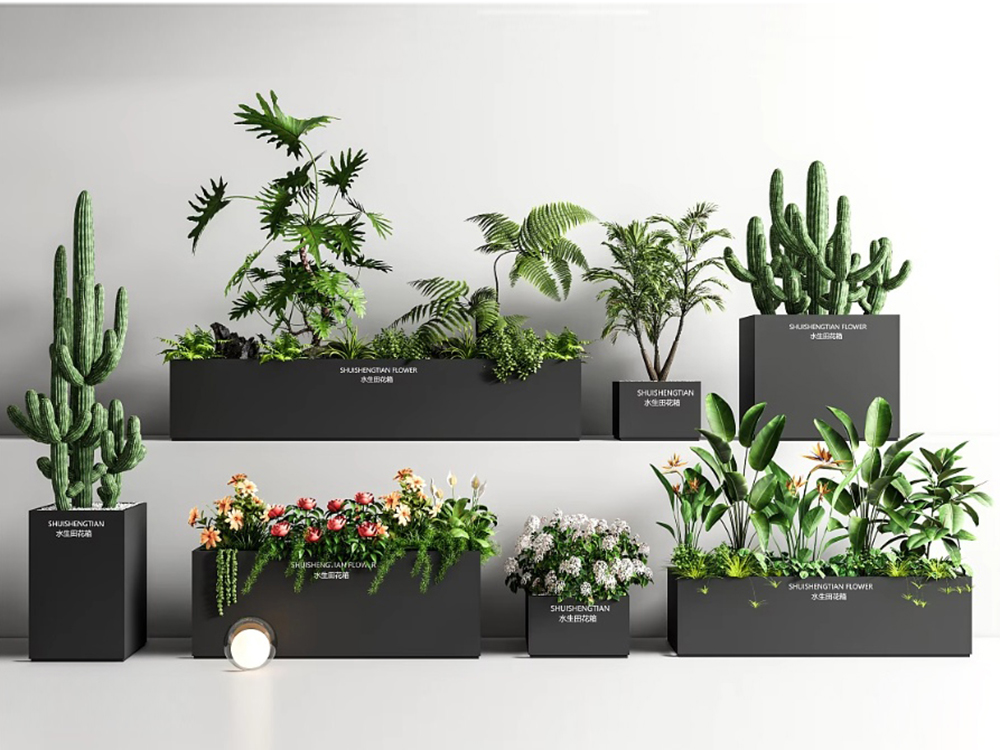
Usually, no. An outdoor planter box can define space and create a visual boundary, but it should not automatically be treated as a substitute for a structural or vehicle-security barrier. If vehicle impact protection is needed, specify a product designed and verified for that purpose.
Yes. Concrete landscape barriers can be effective in pedestrian plazas when they are carefully positioned to manage vehicle access and define site edges. To avoid a harsh appearance, combine them with seating, planting, lighting, textured finishes, or adjacent landscape features.
Outdoor planter boxes are often better for improving the passenger experience around bus stop shelters because they add greenery, soften hard surfaces, and support visual branding. However, concrete barriers or other dedicated protective elements may still be needed where the shelter is close to moving traffic.
Yes, but only if they are designed as engineered stormwater or bioretention planters. These systems need appropriate planting media, drainage layers, overflow details, and site connections. A standard decorative planter does not automatically provide stormwater-treatment performance.
Concrete landscape barriers generally require less routine maintenance because they do not need irrigation or plant care. Outdoor planter boxes require ongoing landscape maintenance, including watering, pruning, cleaning, drainage inspection, and seasonal replacement of plants when necessary.
Yes. Commercial outdoor planter boxes can be customized with powder-coated colors, logos, perforated panels, decorative patterns, LED lighting, solar modules, signage, and digital display components. This makes them useful for municipal branding and smart public-space projects.
Buyers should ask about material thickness, structural design, anti-corrosion treatment, drainage, anchoring, loading capacity, finish options, planting depth, lighting and electrical specifications, installation method, customization capability, packaging, lead time, and quality-control procedures.
1. U.S. Environmental Protection Agency. [Types of Green Infrastructure]
2. U.S. Environmental Protection Agency. [Stormwater Best Management Practice: Bioretention (Rain Gardens)]
3. U.S. Environmental Protection Agency. [Social Benefits of Green Infrastructure]
4. Federal Highway Administration. [Primer on Impact Protection for Critical Transportation Infrastructure]
5. Nieuwenhuijsen, M. J. [Green Infrastructure and Health], *Annual Review of Public Health*, 2021.
6. U.S. Environmental Protection Agency. [Green Infrastructure]


