
Email: ainlbusshelter@gmail.com | WhatsApp: +86-18800607527
Views: 298 Author: Ainl Bus Shelter Publish Time: 2026-11-16 Origin: Site


Content Menu
● Outdoor LCD Display vs. Outdoor LED Display: Key Differences
● Which Outdoor Advertising Display Performs Better in Direct Sunlight?
>> Brightness matters, but there is no universal minimum
>> Reflections determine how much contrast survives
>> Heat can undermine a bright screen
● Outdoor LCD vs. LED: Resolution, Viewing Distance, and Content
>> Why LCD often suits close-range advertising
>> Why LED scales effectively for large advertising
>> Specify pixels before comparing quotations
● Durability: Assess the Complete Outdoor Display System
>> Check ingress protection and impact resistance separately
>> Design maintenance access before installation
● Outdoor LCD vs. LED Display Costs: Compare Ownership, Not Just Purchase Price
>> Build a five-year cost model
● A Practical Sunlight Acceptance Test Before You Buy
● Which Display Fits Your Advertising Project?
>> Pedestrian bus shelter with detailed information
>> Large roadside advertising structure
>> Municipal advertising network
● How Ainl Supports Outdoor Display Integration
>> Is an outdoor LED display always better in direct sunlight?
>> Can an indoor LCD become an outdoor display inside a waterproof cabinet?
>> Which technology is better for small text?
>> Which outdoor display uses less electricity?
>> How long will an outdoor advertising display last?
>> Can outdoor LCD and LED displays use solar power?
An outdoor LCD display is usually the better choice for close-range advertising with detailed text, while an outdoor LED display generally suits large-format advertising viewed from farther away. Both can work in direct sunlight. The right choice depends on viewing distance, reflections, thermal management, screen size, and operating costs—not brightness alone.
At Ainl, our approach is to evaluate the complete installation before recommending a display technology. A pedestrian reading a bus-stop advertisement has different needs from a driver passing a roadside billboard.
This guide compares outdoor LCD and LED advertising displays from a manufacturer's and project buyer's perspective, helping you specify a system that remains readable, serviceable, and commercially useful.
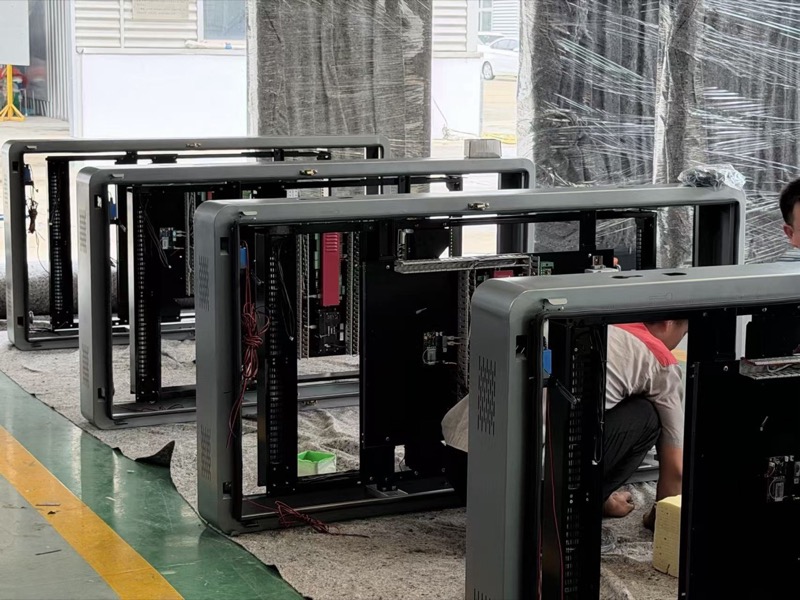
First, clarify the terminology. Most modern outdoor LCD displays use LED backlighting. However, an "outdoor LED display" in this comparison means a direct-view LED screen, where the LEDs themselves produce the visible image.
| Selection factor | Outdoor LCD display | Outdoor direct-view LED display |
|---|---|---|
| Image formation | Liquid crystals control light from a backlight | LED pixels emit light directly |
| Strongest application | Detailed, close-range advertising | Large-format, longer-distance advertising |
| Sunlight performance | Depends on brightness, reflections, and cooling | Depends on brightness, surface contrast, and cooling |
| Resolution | Dense pixels within a fixed panel size | Determined by pixel pitch and screen dimensions |
| Screen dimensions | Based on available panel formats | Modular cabinets support scalable dimensions |
| Maintenance | Panel or integrated-component servicing | Individual modules and components may be replaceable |
| Touch interaction | Common integration option | Possible, but requires project-specific engineering |
| Cost comparison | Often practical for compact information displays | Often practical for large advertising surfaces |
Neither technology wins every category. The objective is to match image quality and installation requirements without buying unnecessary specifications.
Display brightness is measured in nits, equivalent to candelas per square meter.
For a concrete comparison, Samsung specifies 3,500-nit typical brightness for its OH55A outdoor LCD signage, with a 4,000-nit peak. Its XAT outdoor LED model with 6.67 mm pixel pitch specifies 6,000 nits.
These examples demonstrate the brightness available in purpose-built outdoor products. They are not minimum requirements, market-wide averages, or Ainl product specifications.
An exposed roadside installation may need substantially different performance from a shaded pedestrian kiosk. Screen orientation, local sunlight, surrounding surfaces, and content all influence readability.
Our recommendation is to evaluate sunlight readability at the intended site rather than approve a purchase from a brightness figure alone.
Sunlight reflected toward the viewer makes dark image areas appear lighter. This reduces the visible difference between text and its background.
Outdoor LCD displays can address this with anti-reflection glass and appropriate optical construction. For example, Samsung states that its OH55A protective glass has a total reflection rate below 1.5%.
Direct-view LED displays also need effective surface contrast. A bright LED screen can still lose visual impact when sunlight illuminates its face.
For either technology, request an outdoor demonstration showing:
- Dark scenes and shadow detail.
- White text against dark backgrounds.
- Brand colors and product photography.
- Content viewed from realistic side angles.
- Automatic brightness adjustment as lighting changes.
Direct sunlight adds thermal load while the display's electronics generate internal heat.
LCD systems require particular attention to panel temperature because excessive heat can affect the liquid-crystal layer and produce visible darkening. LED systems also need thermal engineering to protect emitters, power supplies, and control electronics.
A weather-resistant cabinet is therefore only part of the solution. Ask how the complete assembly manages heat, including protective glazing, ventilation, cooling equipment, and installation clearances.
An outdoor LCD display typically provides dense pixels within a compact panel. This makes it a strong candidate for advertisements containing prices, maps, product details, or service information.
Samsung's 55-inch OH55A, for instance, specifies a 1,920 × 1,080 resolution.
Suitable applications include:
- Bus-shelter advertising panels.
- Pedestrian information kiosks.
- Outdoor restaurant menus.
- Shopping-center directories.
- Interactive public-information terminals.
However, available resolution is not a reason to make text unnecessarily small. Design for the audience's actual reading distance and time.
Direct-view LED screens use modular construction, making them suitable for large advertising surfaces and project-specific dimensions.
Their resolution depends on pixel pitch: the center-to-center distance between adjacent pixels. Smaller pitch provides more pixels within the same area and supports closer viewing.
Planar's guidance emphasizes that acceptable viewing distance also depends on eyesight, content, and application. A single pitch-to-distance rule cannot replace a visual assessment.
Do not assume LED is unsuitable for pedestrians. Fine-pitch outdoor LED products exist, including Planar models with 1.3, 1.6, and 2.0 mm pitches. Their suitability still depends on budget, content, and installation conditions.
Consider an illustrative LED screen measuring 4,000 × 2,000 mm:
- At 4 mm pitch, its theoretical resolution is 1,000 × 500 pixels.
- At 8 mm pitch, it is 500 × 250 pixels.
Actual dimensions must accommodate the selected modules and cabinets.
Both screens have the same physical area, but the finer-pitch version contains four times as many pixels. This explains why screen area alone is an inadequate basis for comparing quotations.
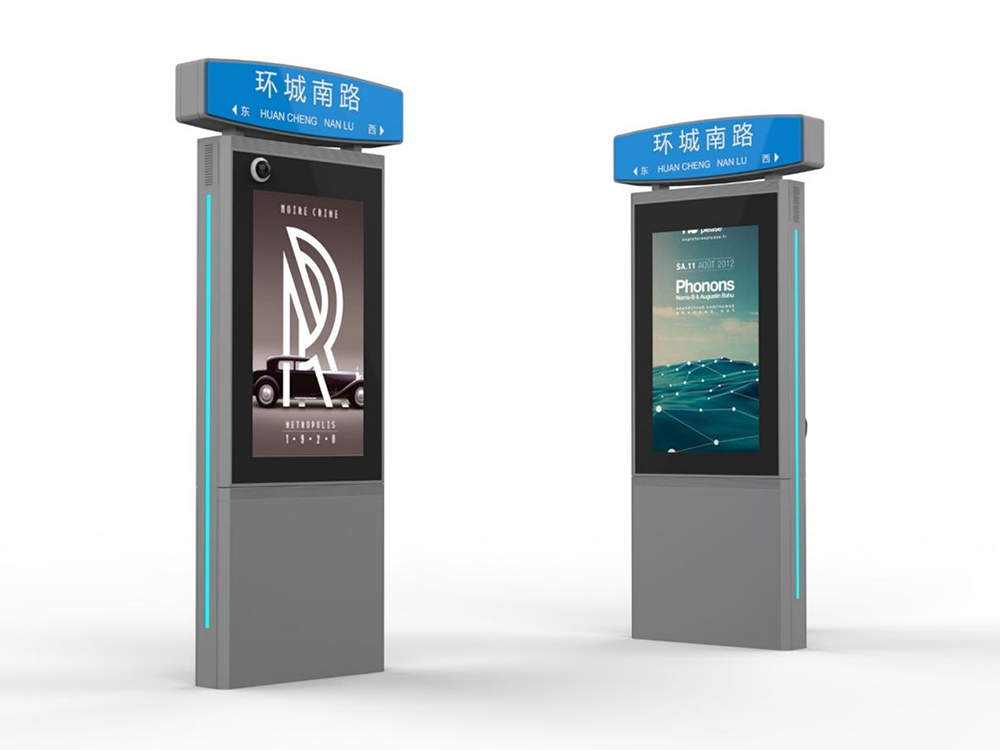
Outdoor products may carry different protection ratings. Samsung's OH55A LCD specifies IP56 ingress protection and IK10 impact resistance. Its XAT outdoor LED example specifies IP65 protection on both front and rear.
These examples should not become blanket claims about either technology.
Ask suppliers to identify:
1. Which components and surfaces the rating covers.
2. Whether the complete proposed enclosure was evaluated.
3. How cable entries, doors, and service openings are protected.
4. What protection remains after accessories are integrated.
Impact resistance is a separate consideration from dust and water ingress. Public-facing installations should address both where relevant.
An LED module may be replaceable, but that advantage matters little if reaching it requires expensive lifting equipment.
Similarly, an LCD cabinet needs enough access for panel replacement, cooling-system maintenance, and electrical servicing.
Before approving drawings, review front or rear access, door swing, pedestrian clearance, lifting requirements, and spare-parts arrangements.
Our procurement recommendation is simple: ask the supplier to explain how a technician would replace each major component at the finished site.
There is no reliable universal answer to "Which is cheaper?"
For compact, information-rich applications, LCD may provide the required resolution economically. For very large advertising areas, modular LED may offer a more practical solution.
However, installation conditions can change that comparison.
Request a total ownership cost comparison covering:
| Cost category | What to include |
|---|---|
| Equipment | Display, controller, enclosure, and software |
| Installation | Foundations, structure, cabling, access, and commissioning |
| Electricity | Realistic brightness schedules and auxiliary equipment |
| Maintenance | Cleaning, cooling-system service, and inspections |
| Repairs | Parts, labor, lifting equipment, and travel |
| Downtime | Lost advertising availability and service disruption |
Use measured average operating power under agreed conditions—not maximum power alone.
For budgeting:
Annual electricity use = average system power in kW × operating hours per day × operating days.
For illustration, a complete system averaging 0.5 kW for 16 hours daily would consume 2,920 kWh annually. This is an arithmetic example, not an efficiency claim for LCD or LED.
Solar power also requires an energy budget. Evaluate local solar availability, battery autonomy, system losses, and seasonal demand before promising off-grid operation.
A structured acceptance test provides more useful evidence than a showroom photograph.
We recommend agreeing on the following procedure before final approval:
1. Define the installation conditions. Record orientation, shade, viewing distances, operating hours, and expected climate.
2. Use representative content. Include actual advertisements, small text, dark images, and brand colors.
3. Test demanding daylight conditions. Check readability during the site's most problematic sunlight period, not only a convenient morning demonstration.
4. Check thermal stability. Observe sustained operation and confirm whether brightness reduction occurs.
5. Verify viewing angles. Include seated users, pedestrians, and relevant vehicle approaches.
6. Test sunglasses compatibility. For LCD, verify the actual panel and orientation rather than assuming polarized lenses will work.
7. Check nighttime operation. Confirm that automatic dimming produces comfortable output and meets applicable local requirements.
8. Document acceptance criteria. Agree on readable text, permitted faults, control behavior, and service responsibilities.
This is a proposed procurement workflow, not a claim that every project requires the same formal test standard.
The following are illustrative selection scenarios, not completed Ainl customer case studies.
Start by evaluating outdoor LCD when passengers need to read timetables, maps, prices, or interactive content nearby.
Prioritize reflections, glazing, cooling, accessibility, and service access. Consider fine-pitch LED where its modular format or other project requirements justify it.
Start by evaluating outdoor LED when the message must be seen across a large distance and the screen requires substantial dimensions.
Choose pixel pitch around the actual audience and content. Avoid paying for detail that cannot be appreciated at the intended distance.
A mixed approach may be more appropriate than standardizing on one technology.
LCD can serve information-rich pedestrian locations, while LED handles prominent large-format placements. Standardize content workflows, monitoring, spare-parts planning, and maintenance procedures where possible.
Ainl is a Chinese manufacturer and solutions provider with 16 years of experience in smart-city public facilities and outdoor advertising products.
Our manufacturing base covers more than 260 mu, with approximately 150,000 square meters of factory space. Supporting facilities include a provincial-level software and hardware R&D center, CNC sheet-metal processing, large-scale coating facilities, and an electrical testing laboratory.
As a national high-tech enterprise, Ainl supports OEM/ODM customization covering dimensions, structures, colors, screen configurations, lighting, solar-power options, and city-branding elements.
These capabilities support integrated product development. Display performance, certifications, and structural suitability must still be confirmed for the specific configuration and destination market.
For a project-specific comparison, send Ainl your installation location, screen dimensions, viewing distance, sunlight exposure, operating schedule, and content examples. Request an LCD-versus-LED proposal covering readability, enclosure design, maintenance access, and operating-cost assumptions.
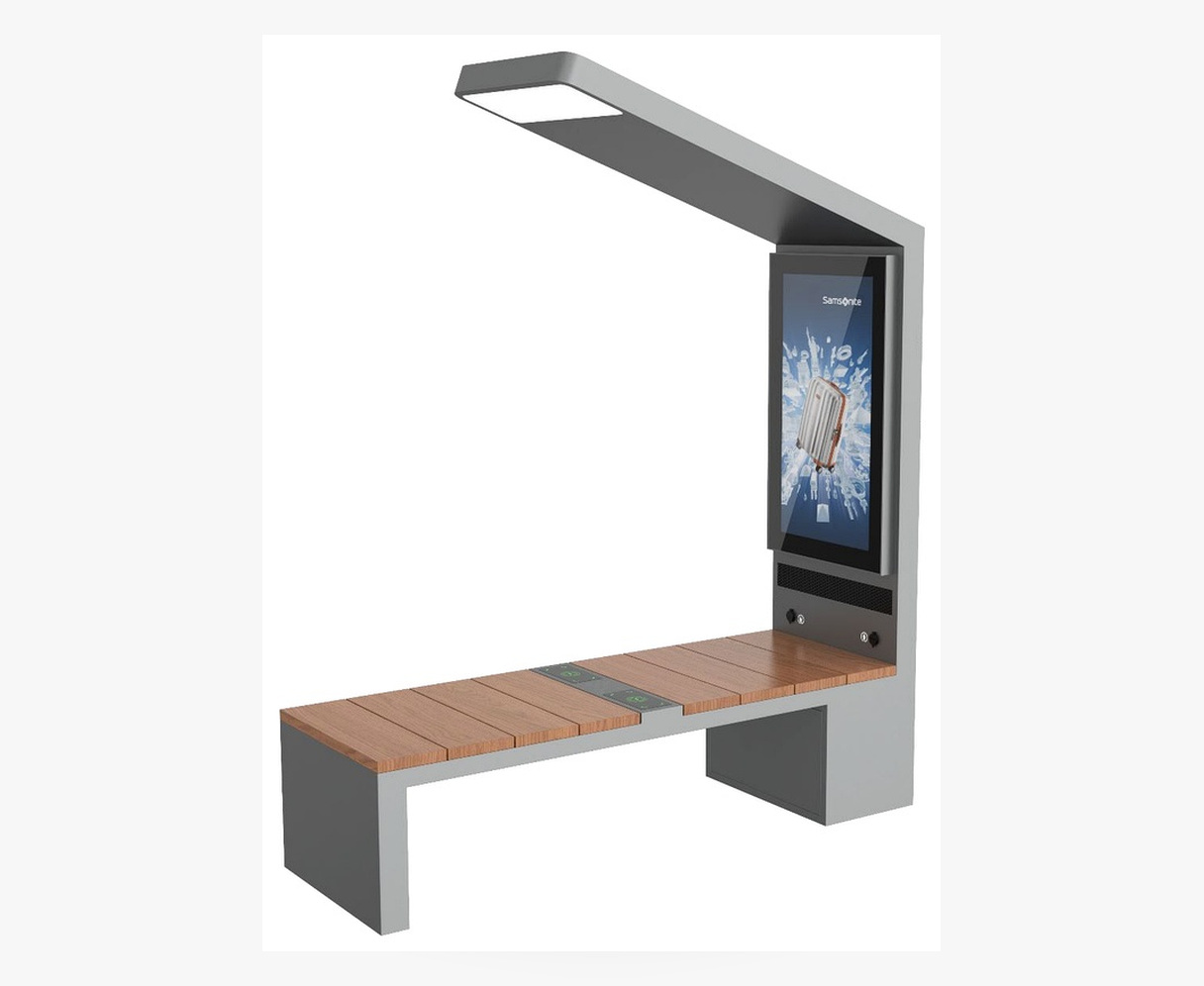
No. LED often provides high brightness and scalable dimensions, but outdoor LCD can also perform effectively. Reflections, thermal stability, and content determine practical readability.
A cabinet alone does not establish outdoor suitability. The complete system still needs sufficient brightness, appropriate temperature performance, reflection control, and verified environmental protection.
LCD is often practical for compact, close-viewed information displays. Fine-pitch outdoor LED can also show detailed content, provided its resolution and viewing distance suit the task.
Neither technology is universally more efficient. Compare complete systems at equivalent screen area, useful brightness, operating hours, content, and cooling conditions.
Do not rely on a single headline lifespan. Request warranty terms, operating assumptions, brightness-degradation information, component availability, and maintenance requirements for the complete system.
Potentially, but feasibility depends on daily energy demand, solar resources, battery storage, and required autonomy. Size the power system around a verified load profile.
- Samsung. [Outdoor Signage OH55A — specifications and outdoor-performance features]. Source for LCD brightness, reflection performance, IP56, and IK10 examples. [samsung]
- Samsung. [Outdoor Signage OH55A — panel resolution and polarized-lens visibility]. Source for the 55-inch Full HD example and model-specific viewing features. [samsung]
- Samsung. [Pixel Pitch 6.67 mm Outdoor LED XAT]. Source for the 6,000-nit LED example and front/rear IP65 ratings. [samsung]
- Samsung. [Taking the Message Outdoors]. Technical background on outdoor LCD backlighting, sunlight, protective glass, and thermal management; not used as current pricing evidence. [image-us.samsung]
- Planar. [What Is Pixel Pitch and Why Does It Matter?]. Published January 14, 2025. Source for pixel density, viewing-distance relationships, and limitations of viewing-distance formulas. [planar]
- Planar. [Planar Luminate Ultra W Series]. Source for fine-pitch outdoor LED availability and model-specific outdoor protection. [planar]


