
Email: ainlbusshelter@gmail.com | WhatsApp: +86-18800607527
Views: 257 Author: Ainl Bus Shelter Publish Time: 2026-11-25 Origin: Site


Content Menu
● High-Brightness Outdoor LCD Display vs. Standard Commercial LCD: Key Differences
● Why Direct Sunlight Makes LCD Advertising Screens Difficult to Read
>> Screen Brightness Is Only Part of the Equation
>> Solar Heat Creates a Separate Engineering Problem
● Brightness Comparison: How Many Nits Do You Actually Need?
>> Standard Commercial LCD: Suitable for Controlled Lighting
>> High-Brightness Outdoor LCD: Evaluate Typical and Peak Output
● Anti-Reflection Glass and Polarization: The Overlooked Comparison
>> Why More Brightness Cannot Solve Every Reflection Problem
>> Test with Polarized Sunglasses
● Thermal Management and Weather Protection
>> Compare Solar Exposure, Not Just Ambient Temperature
>> Understand What an IP Rating Does—and Does Not—Prove
● High-Brightness Window Displays Are Not Full-Outdoor Displays
● A Practical Acceptance Test for Direct-Sunlight LCD Displays
>> 1. Reproduce the Intended Installation
>> 2. Evaluate the Most Difficult Sunlight Period
>> 3. Use Real Advertising and Information Content
>> 4. Check Viewing Positions and Sunglasses
>> 5. Observe Sustained Operation
>> 6. Agree on Acceptance Criteria Before Ordering
● Total Cost: Compare the Installed System, Not the Bare Screen
● Which LCD Display Should Your Project Choose?
● How Ainl Supports Customized Outdoor Advertising Displays
>> Can a Standard Commercial LCD Be Used Outdoors Inside a Cabinet?
>> Is a 4,000-Nit LCD Always Better Than a 3,500-Nit LCD?
>> Does a 24/7 Rating Mean the Display Can Handle Direct Sunlight?
>> Can a High-Brightness Window Display Be Installed in the Rain?
>> Should Outdoor LCD Displays Run at Maximum Brightness All Night?
>> Can Ainl Customize a Solar-Powered Outdoor LCD Advertising Display?
A high-brightness outdoor LCD display is generally the better choice for direct sunlight. A standard commercial LCD can perform well indoors, but it is not automatically suitable for a sun-exposed pavement, transport shelter, or roadside advertising kiosk. The difference goes beyond brightness: reflections, solar heat, weather protection, and maintenance access all affect whether people can actually read your message.
At Ainl, our approach to outdoor advertising displays starts with the installation environment rather than screen size alone. Drawing on our manufacturing and customization capabilities, we assess the screen, enclosure, structure, and supporting systems as one integrated product.
This comparison explains where each display belongs—and how buyers can avoid paying for a screen that looks impressive indoors but disappoints outside.

Here, "standard commercial LCD" means an indoor business display, not a consumer television or a specialized high-brightness window-facing screen.
| Comparison point | High-brightness outdoor LCD display | Standard commercial LCD |
|---|---|---|
| Intended environment | Exposed outdoor installations, subject to model specifications | Shops, offices, lobbies, and other controlled interiors |
| Brightness benchmark | Some full-outdoor models specify 3,500 nits typical and 4,000 nits peak | Around 350–500 nits is a common indoor signage benchmark |
| Direct-sunlight visibility | Engineered around higher luminance and reflection control | Often loses contrast under strong sunlight |
| Thermal design | Must address backlight heat and solar exposure | Generally designed around indoor operating conditions |
| Weather protection | Available with tested enclosure protection | Usually requires a separately engineered outdoor system |
| Sunglasses visibility | May include polarization measures for improved readability | Must be checked; performance varies |
| Operating schedule | Many models support continuous operation | Depends on the individual model |
| Initial investment | Generally higher for a complete outdoor system | Usually lower before outdoor integration costs |
| Best-fit applications | Street kiosks, transport information, outdoor advertising | Indoor promotions, reception screens, sheltered interior signage |
These are category-level comparisons, not universal specifications. Request documentation for the exact display and completed assembly being quoted.
Display luminance is measured in nits, equivalent to candelas per square metre. Higher luminance helps an image remain visible against bright surroundings.
However, the viewer sees both the displayed image and light reflected from the screen surface. Strong reflections raise the apparent black level, reducing the contrast between dark and bright content.
That is why a screen with an impressive indoor contrast ratio can still look washed out outside. For procurement, sunlight readability matters more than an isolated brightness figure.
Sunlight also heats the display assembly. Meanwhile, the LCD backlight and electronics generate their own heat.
A protective cabinet does not eliminate this load. Without appropriate thermal engineering, it can restrict heat dissipation. Excessive panel temperature may produce discoloration or dark patches, sometimes described as solar blackening.
The practical lesson is straightforward: making an indoor LCD brighter or enclosing it behind glass does not, by itself, create a reliable outdoor display.
An indoor commercial display around the 350–500-nit benchmark can be entirely appropriate for a reception area or shopping-centre corridor.
Its advantages include lower acquisition cost, simpler installation, and no need to engineer for direct rain exposure.
The problem arises when buyers extend that suitability to an exposed outdoor location. A covered entrance may still receive low-angle sunlight, reflected light, and heat from nearby paving or glazing.
For a concrete market benchmark, Samsung's OH-series outdoor datasheet lists 3,500-nit typical brightness and 4,000-nit peak brightness for specified models.
These figures illustrate the difference from conventional indoor signage. They are not a universal minimum or a guarantee that every similarly rated display will perform equally.
Ask suppliers:
- Is the quoted value typical, maximum, or temporary peak brightness?
- Does it describe the bare panel or the finished display?
- Under what temperature conditions was it measured?
- Does the system reduce brightness when internal temperatures rise?
- Can automatic dimming be configured for local nighttime conditions?
The important specification is usable, sustained output under the project's actual conditions—not simply the largest number in a brochure.
A higher-output backlight cannot fully compensate for poorly controlled reflections.
Outdoor LCD advertising displays may use anti-reflection glass and other optical treatments to improve visibility. Anti-glare and anti-reflection are related concepts, but they are not interchangeable specifications.
Instead of accepting "sunlight readable" as a complete answer, request:
- The front-glass specification.
- Available reflection or optical-performance data.
- Information on the finished protective assembly.
- A demonstration using the intended content.
Compare complete units wherever possible. An exposed panel sample does not show what happens after protective glass and other layers are added.
Some LCD and viewing-angle combinations can appear unusually dark through polarized sunglasses.
Outdoor display manufacturers may use polarization technologies to improve this experience. Nevertheless, the installed screen should be checked in its intended portrait or landscape orientation.
For street advertising, a quick sunglasses test can reveal a usability problem that a specification table misses.
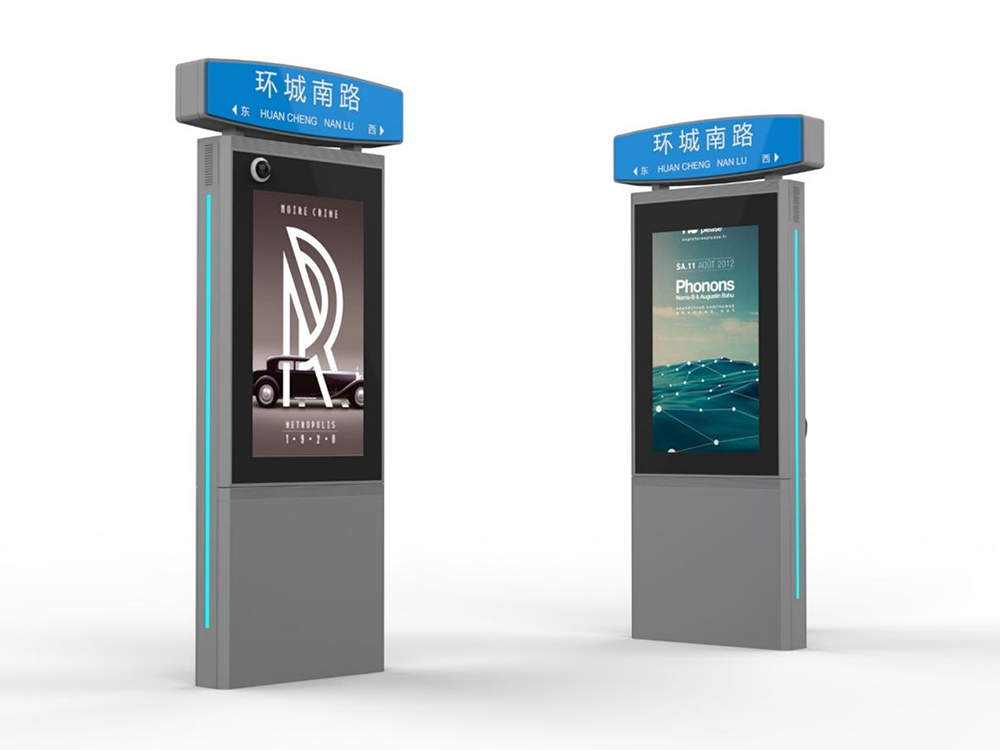
Ambient temperature describes the surrounding air. It does not fully describe the temperature reached by a sun-exposed display.
As an example, specified Samsung OH-series models list an operating range of −30°C to 50°C. That range belongs to those products; it should not be applied to an unrelated LCD panel or custom enclosure.
For a project assessment, provide the manufacturer with:
- Installation location and screen orientation.
- Expected daily sunlight exposure.
- Local temperature and humidity conditions.
- Cabinet colour, dimensions, and ventilation constraints.
- Required operating hours.
The cooling approach should follow this assessment. A fan, heat exchanger, or air-conditioning system should not be selected solely because it appears on a standard options list.
An enclosure protection rating addresses defined ingress conditions. It does not independently prove sunlight readability, impact resistance, corrosion resistance, or structural adequacy.
For example, the cited outdoor models specify IP56 protection and separately identify IK10-rated protective glass.
For a customized kiosk, clarify whether supporting evidence applies to the complete delivered assembly, including doors, cable entries, ventilation arrangements, and service openings.
A protected screen inside an inadequately detailed cabinet still leaves the project exposed.
This distinction deserves special attention.
A high-brightness window-facing LCD may offer substantial luminance while remaining intended for installation indoors behind glazing.
Samsung's OMN window-display documentation, for example, specifies 4,000-nit brightness while also stating installation-dependent temperature limits. High brightness alone therefore does not establish suitability for unsheltered outdoor use.
For buyers, there are three separate categories:
1. Standard indoor commercial LCD.
2. High-brightness indoor window-facing LCD.
3. Full-outdoor LCD display or properly engineered outdoor assembly.
Comparing only categories one and two can overlook the weather and integration requirements of category three.
Ainl's recommended procurement approach is to turn "good visibility" into an agreed test rather than a subjective promise.
The following is a proposed project checklist, not a certification standard.
Test the proposed enclosure, front glass, orientation, and mounting arrangement. Use the actual display configuration wherever practical.
Identify when sunlight strikes the screen most severely. Do not rely exclusively on an overcast-day demonstration or an indoor showroom inspection.
Include prices, maps, small text, brand colours, and representative images. Bright demonstration videos can conceal weaknesses in everyday content.
Inspect readability from expected distances, pedestrian approaches, accessible viewing heights, and through polarized lenses.
Allow the assembly to reach stable operating conditions. Record visible dimming, dark patches, warnings, and available temperature readings.
Document the content, viewing positions, environmental conditions, operating duration, and acceptable performance. This creates a clearer basis for delivery inspection and warranty discussions.
A standard commercial LCD may appear economical until the quotation includes outdoor integration.
A fair total cost comparison should consider:
- Display and protective enclosure.
- Cooling, heating, and control equipment.
- Mounting structure, foundations, and installation.
- Power and communications connections.
- Cleaning and scheduled maintenance.
- Replacement access and spare components.
- Downtime during servicing.
Automatic brightness control also deserves attention. Outdoor brightness is valuable during intense daylight, but maintaining the same output after dark may waste energy and create an uncomfortable viewing experience.
Request measured operating power under agreed conditions rather than estimating consumption from brightness alone.
For advertising networks, an especially useful commercial measure is cost per readable operating hour. Define how readability and availability will be assessed before using that measure to compare proposals.
| Installation scenario | More appropriate starting point | Key qualification |
|---|---|---|
| Indoor reception or showroom | Standard commercial LCD | Confirm ambient lighting and operating schedule |
| Shop window facing a sunny street | High-brightness window-facing LCD | Check behind-glass thermal conditions |
| Exposed pavement advertising kiosk | Full-outdoor high-brightness LCD system | Verify optics, cooling, enclosure, and serviceability |
| Open-sided transport shelter | Outdoor-rated system assessment | A roof does not eliminate angled sunlight or wind-driven rain |
| Municipal information terminal | Integrated outdoor solution | Include accessibility, structure, impact risk, and maintenance |
A standard commercial LCD remains a sensible purchase in the right environment. The mistake is not choosing the lower-cost category; it is choosing it for conditions it was never designed to handle.
Ainl is a Chinese manufacturer and solution provider with 16 years of experience in outdoor LED/LCD advertising displays and smart-city public facilities.
Our manufacturing base covers more than 260 mu, with approximately 150,000 square metres of factory space. Supporting capabilities include a provincial-level software and hardware R&D centre, CNC sheet-metal precision processing, a large coating centre, and an electrical testing laboratory.
As a nationally recognized high-tech enterprise, Ainl also holds the stated Grade III steel-structure and municipal construction contracting qualifications, management-system certifications, and Level III work-safety standardization certification.
These capabilities support coordinated product development. They do not replace model-specific performance evidence or destination-market approvals.
Our OEM/ODM services cover:
- Product dimensions, structures, and colours.
- Screen configurations and lighting systems.
- Solar-power options.
- City branding and visual identity elements.
For solar-powered projects, available sunlight, display consumption, battery autonomy, and auxiliary loads must be assessed together.
Send Ainl your installation location, screen size, orientation, operating hours, and power conditions. Request a project-specific proposal covering display selection, enclosure design, thermal management, customization, and acceptance testing—not just a panel quotation.
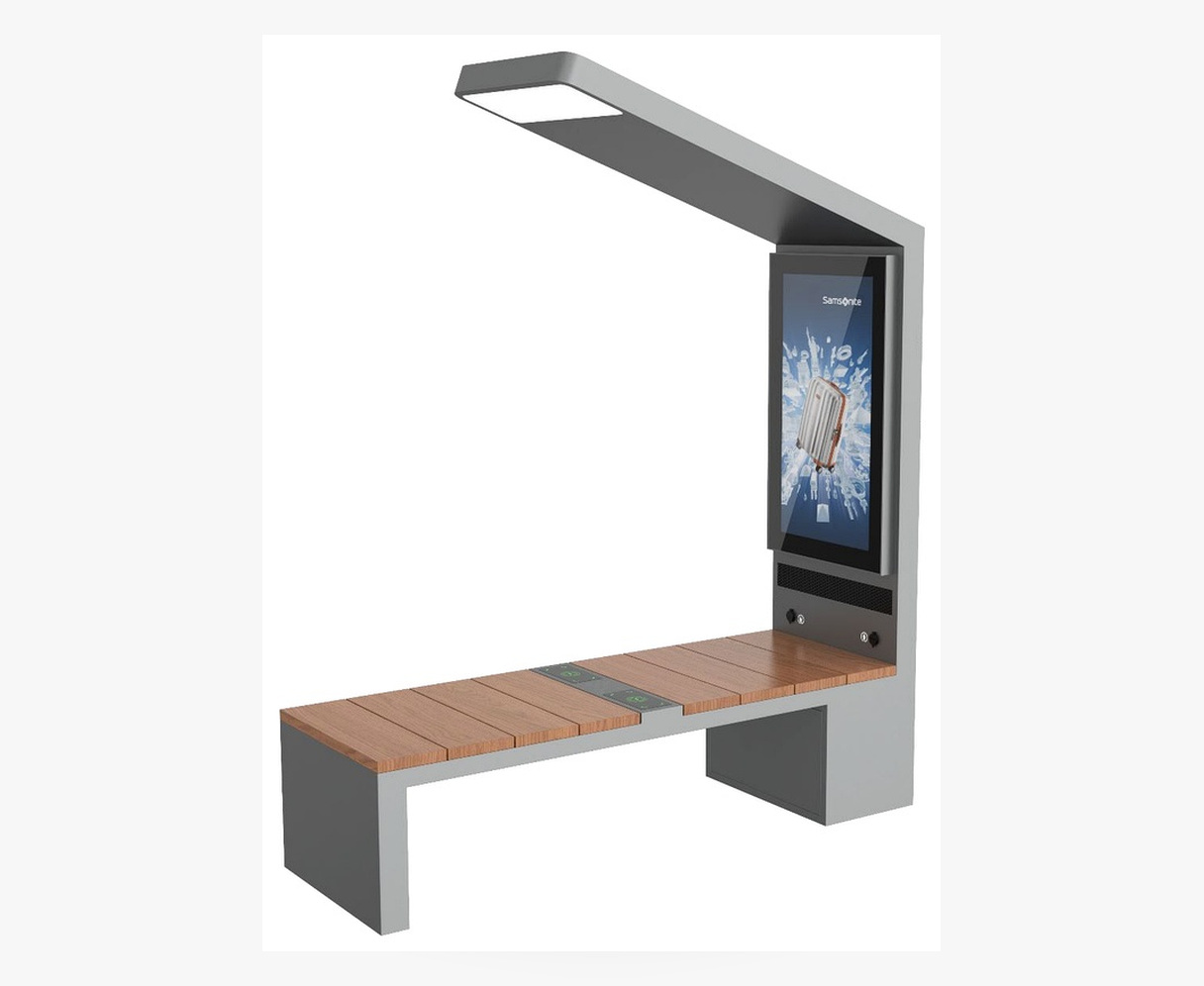
Potentially, as part of a properly engineered system. However, a cabinet alone does not establish adequate brightness, thermal performance, condensation control, or warranty coverage.
No. Compare typical and peak ratings, reflection control, sustained thermal performance, dimming behaviour, and the finished assembly. Brightness figures alone do not establish overall suitability.
No. A 24/7 rating addresses the supported operating schedule. Direct-sunlight suitability requires separate consideration of optical performance, solar heat, and environmental protection.
Not unless its documentation and complete installation explicitly support that exposure. A bright screen intended for indoor window placement is not automatically a full-outdoor product.
Usually not. Ambient-light control can reduce output after dark. The final settings should meet readability needs and applicable local lighting requirements.
Solar-power customization is within Ainl's stated service scope. Feasibility depends on location, screen configuration, operating hours, battery requirements, and the consumption of supporting equipment.
1. [Samsung — "Fighting the Bright: Outdoor Displays Propel Businesses Forward"]. Supports the indoor brightness benchmark and discussion of sunlight, heat, polarization, and automatic brightness control. [insights.samsung]
2. [Samsung — OH46B, OH55A-S and OH75A Full Outdoor Display Datasheet]. Provides model-specific typical and peak brightness, operating-temperature ranges, IP56 protection, IK10 protective-glass durability, and operating schedules. [image-us.samsung]
3. [Samsung — "Taking the Message Outdoors"]. Explains indoor versus outdoor brightness, sunlight-related panel heating, dark blotches, and polarization considerations. This older publication is used for engineering context, not current product selection. [image-us.samsung]
4. [Samsung — OMN and OMN-D Series Datasheet]. Supports the distinction between high-brightness window-facing displays and full-outdoor products, including sunlight-dependent operating conditions. [image-us.samsung]
5. [Samsung — Outdoor and Window Display Solutions]. Describes integrated outdoor-display engineering, ambient-light adjustment, environmental protection, and sunglasses visibility. [samsung]


